💫 The Grand BBQ Polytech Paris-Saclay 2026: Thirty years of technological transformations
on June 7, 2026
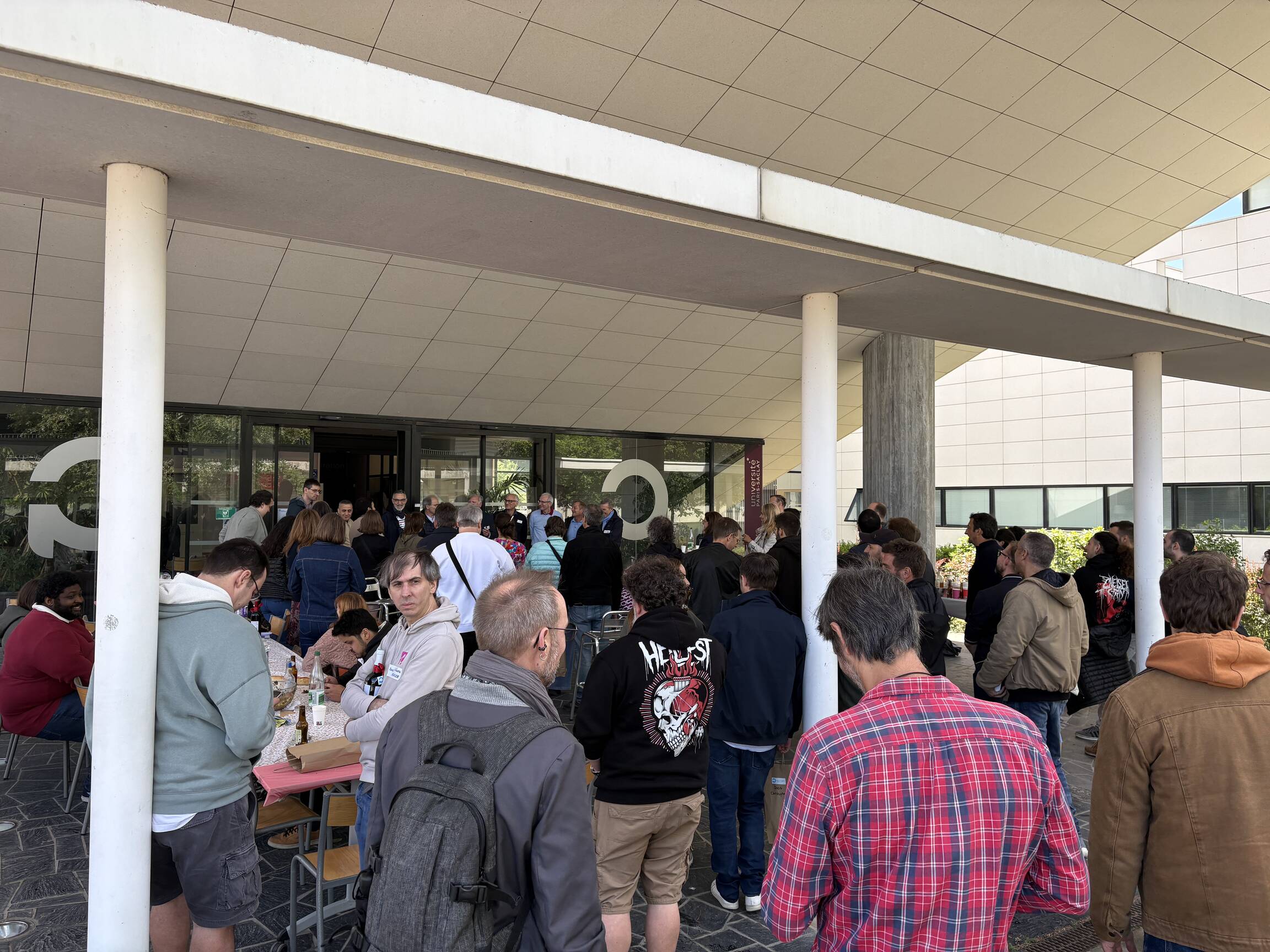
On Saturday, June 6, 2026, alumni of Polytech Paris-Saclay gathered at the Maison de l'Ingénieur in Orsay for the traditional Grand BBQ organized by the Alumni Association.
Each year, this event allows the different graduating classes to come together for a simple moment: to chat, share memories and see again those with whom part of their engineering journey was built.
Polytech Paris-Saclay is the internal engineering school of the University of Paris-Saclay and has been part of the Polytech network since 2010, considered the leading French network for engineering training.
Located in the heart of the Saclay plateau, the school currently trains nearly 1000 engineering students across four main specializations:
- Electronics and computer science for embedded systems
- Computer science and mathematical engineering
- materials, mechanics and energy
- Photonics and optronic systems
A school before school
The institution also relies on around twenty research laboratories and a large network of partner companies, in an environment where scientific research, engineering and technological innovation intersect.
The 2026 edition of the Grand BBQ brought together several anniversary classes, with special attention paid to the graduates of 1986, 1996, 2006 and 2016.
Upon arrival on campus, something immediately struck you: the contrast between the generations present.
Before becoming Polytech Paris-Saclay, the institution was called NFI-FIIFO, the Computer Engineering Training program of the Orsay faculty.
At that time, the school did not yet resemble a major engineering school as we imagine it today.
No real building. No structured campus. No modern computer room. Sometimes there isn't even enough budget for housework.
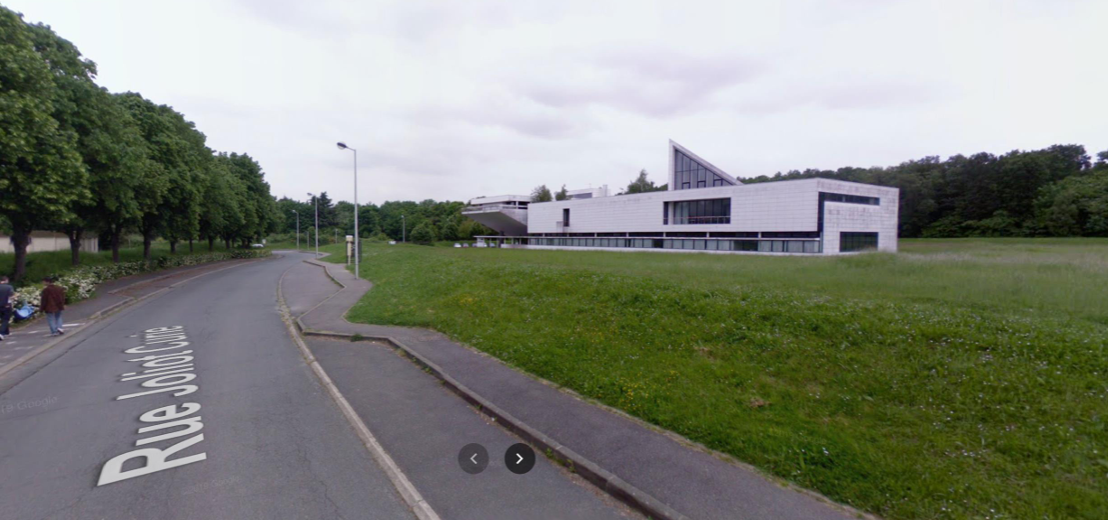
Students attended classes at the Orsay University Institute of Technology (IUT). The Maison de l'Ingénieur (Engineer's House) didn't yet exist. Its construction was delayed after the discovery of a Gallo-Roman villa on the site planned for the foundations. Some alumni recalled a time when the school didn't yet have dedicated facilities, when classes were sometimes spread across several buildings, and when computer technology operated with far more limited resources than today.
And yet, despite these constraints, something was already there.
A culture.
Others naturally engaged in conversation about current topics:
- artificial intelligence
- cloud computing
- cybersecurity
- simulation
- distributed computing
- or even the evolution of digital professions
As the discussions progressed, one idea kept coming up: Technologies change rapidly, but some foundations remain surprisingly stable.
Technical curiosity. Adaptability. Scientific culture. And a desire to build systems capable of evolving with their time.
The organization of the day was provided by the Alumni office of Polytech Paris-Saclay, including a speech session organized in the early afternoon for the anniversary classes.
Between student memory and technological evolution
The most memorable part of the afternoon was probably the series of speeches given by alumni.
Beyond the nostalgic aspect, these speeches primarily traced several decades of evolution in computer science education and the French technological landscape.
Former students recalled a time when the school still had a different name, before the successive mergers that led to the creation of IFIPS and then to integration into the Polytech network.
Through the recounted memories, we discover above all another way of learning computer science.
Some recalled that the Maison de l'Ingénieur (House of Engineers) did not even exist at the beginning of their studies. The courses were then spread across several buildings on the Orsay campus, at a time when university IT infrastructure was still under construction.
Another topic that came up regularly in the discussions was: the beginnings of the Internet.
The old-timers talked about the first TCP/IP architectures, calculations performed under MATLAB, work around neural networks, and the technical constraints that imposed real rigor in the use of machine resources.
At a time when a few seconds of animation could require hours of calculation, computer science was practiced in a much more direct relationship to hardware limitations.
The speeches also highlighted an element often forgotten today: the human dimension of engineering schools.
Several alumni recounted the creation of student associations, the organization of galas, ski trips or events intended to give a collective identity to graduating classes that were still finding their place in the landscape of French elite schools.
This desire to “make the school exist” came up frequently in the testimonies.
And in retrospect, these initiatives also tell the story of the evolution of the engineer's own role.
The modern engineer is no longer solely a specialized technician. He now operates in environments where communication, adaptation, and collaboration become as important as purely technical skills.
The career paths mentioned during the speeches perfectly reflected this diversity:
- defense
- aerospace
- bank
- industry
- research
- administration
- international
- entrepreneurship
Across these very different trajectories, one common thread remained visible: the ability of computer science to constantly evolve, while retaining certain fundamental principles.
Technologies are changing rapidly. The tools are changing. Usage is exploding.
But the scientific foundations mentioned in the speeches — mathematics, networks, algorithms, calculation, modeling — remain at the heart of modern systems today.
An evolution that transcends generations
Ultimately, what emerges from this day is not just nostalgia for past graduating classes.
It is primarily about how several generations of engineers have navigated different major transformations in computing:
- the beginnings of the networks
- the arrival of the Internet
- the democratization of the web
- the explosion of mobile
- cloud computing
- the industrialization of infrastructure
- and now the acceleration around artificial intelligence
Listening to conversations between former students, one quickly realizes that each generation felt like they were living through a period of technological disruption.
For some, this break was the Internet. For others, the web. Today, it takes the form of generative AI and the new uses that accompany it.
And yet, despite these successive changes, the speeches recalled a rather simple reality: The fundamentals often remain the same.
- Understanding a system
- Analyze a problem
- Modeling
- To optimise
- Build
- Testing
- Adapt
The tools evolve enormously, but the engineering logic remains surprisingly stable.
This continuity is particularly noticeable in an environment like the Saclay plateau, where the following have intersected for decades:
- scientific research
- industry
- engineering
- and technological innovation
It is a moment where different eras of computing physically meet in the same place.
Generations who experienced the early days of Unix workstations are exchanging ideas with engineers working today on cloud infrastructures or modern AI systems.
And amidst these discussions, one thing becomes clear: Technological evolution does not truly replace previous generations.
She relies on them.
Modern systems also exist thanks to the foundations built by those who were already experimenting with networks, mathematical models or distributed architectures several decades ago.
And this event ultimately brings to mind something quite rare in today's technology industry: Computer science already possesses its own collective memory.
And this memory continues to be passed on, year after year, between the successive graduating classes on the Polytech Paris-Saclay campus.
Radically different trajectories
Thirty years later, the career paths of former students have become extremely varied.
Some work in the luxury sector. Others in defense, banking, aerospace, or administration.
Some have gone to live in Mexico, Sweden or Switzerland. One of them opened a spa. Another built an Airbus A320 simulator out of LEGO.
The speech brings to mind something essential: Engineering schools do not produce identical career paths.
It creates a common base from which each person builds their own path.
What remains thirty years later
The most powerful moment of the speech probably comes at the end, when the alumni address the young graduates:
“Dare to change jobs, dare to be yourself, dare to have your own convictions.”
The message is simple. Careers are not linear. Neither are the technical courses.
And perhaps that is precisely what connects all these generations: the ability to continue building despite uncertainty.
Looking at these graduating classes meeting again thirty years later, another obvious point emerges.
Technologies are changing. The frameworks are changing. Languages change. Artificial intelligence is already transforming industry.
But some things remain the same:
- curiosity
- resourcefulness
- the desire to create
- and the human connections built around this shared adventure that is computing
Thanks
Thank you to the graduating classes for their testimonials. Thank you to the former professors and teams at Polytech Paris-Saclay. And thank you to the organizers of the Grand BBQ Alumni for allowing all these stories to reconnect, for an afternoon.
In an industry obsessed with constant novelty, this day ultimately served as a reminder of one simple thing: behind every technological breakthrough, there are often several generations of engineers who built the foundations long before they became visible.
Because ultimately, behind the technologies, It is primarily generations of people who continue to exist together.