✨ Transformative design: no longer designing uses, but metamorphoses
on May 1, 2026
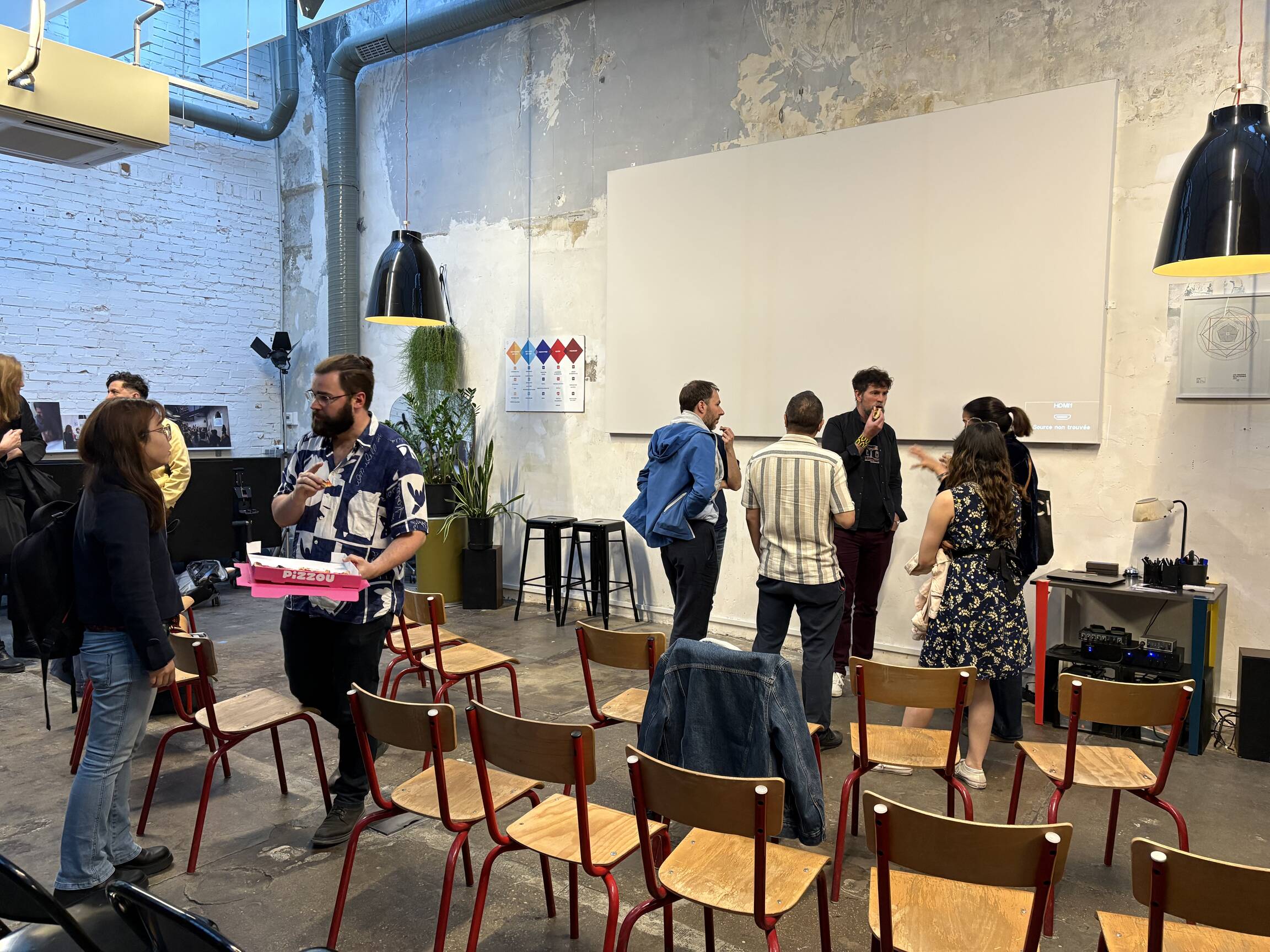
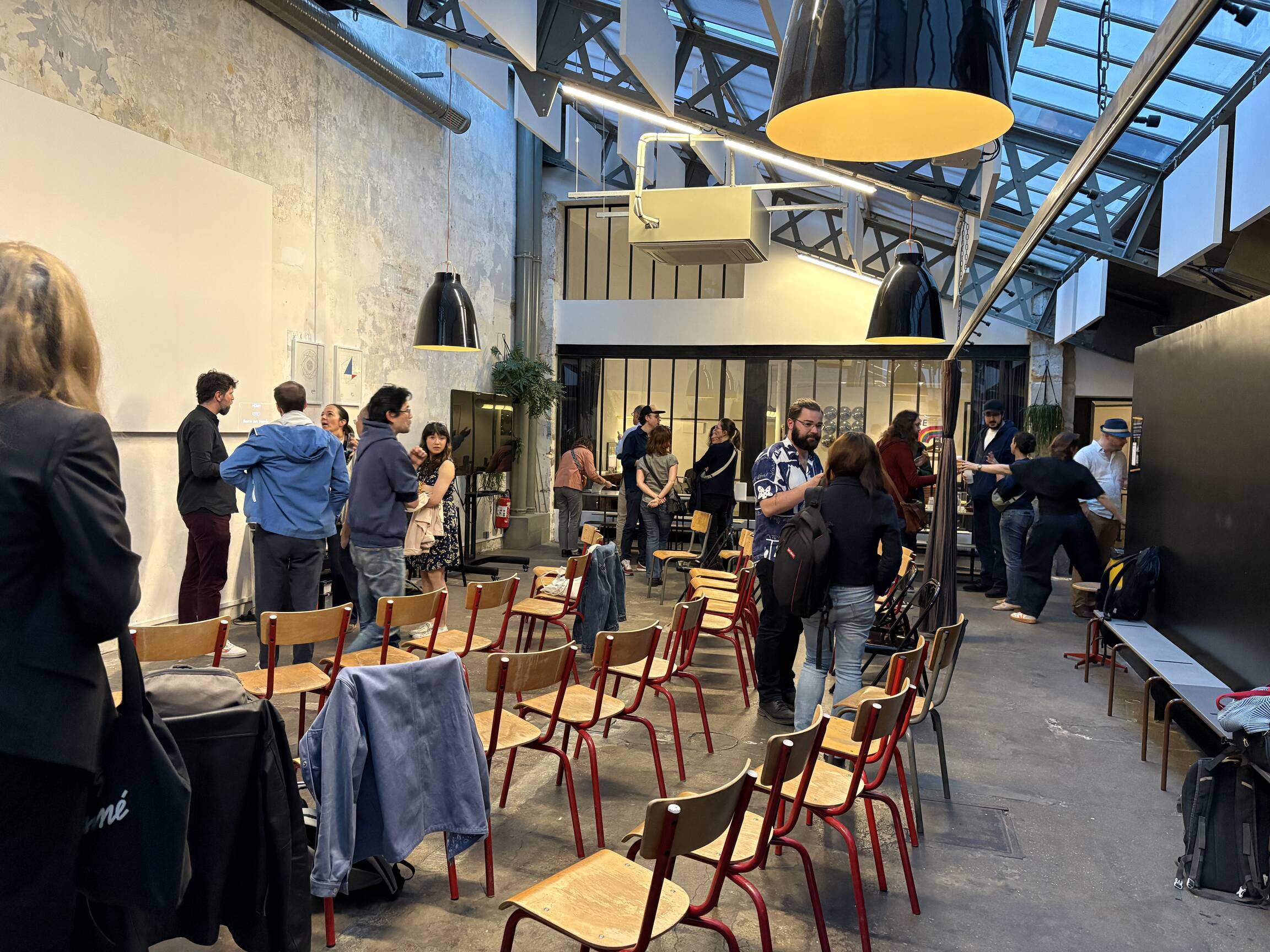
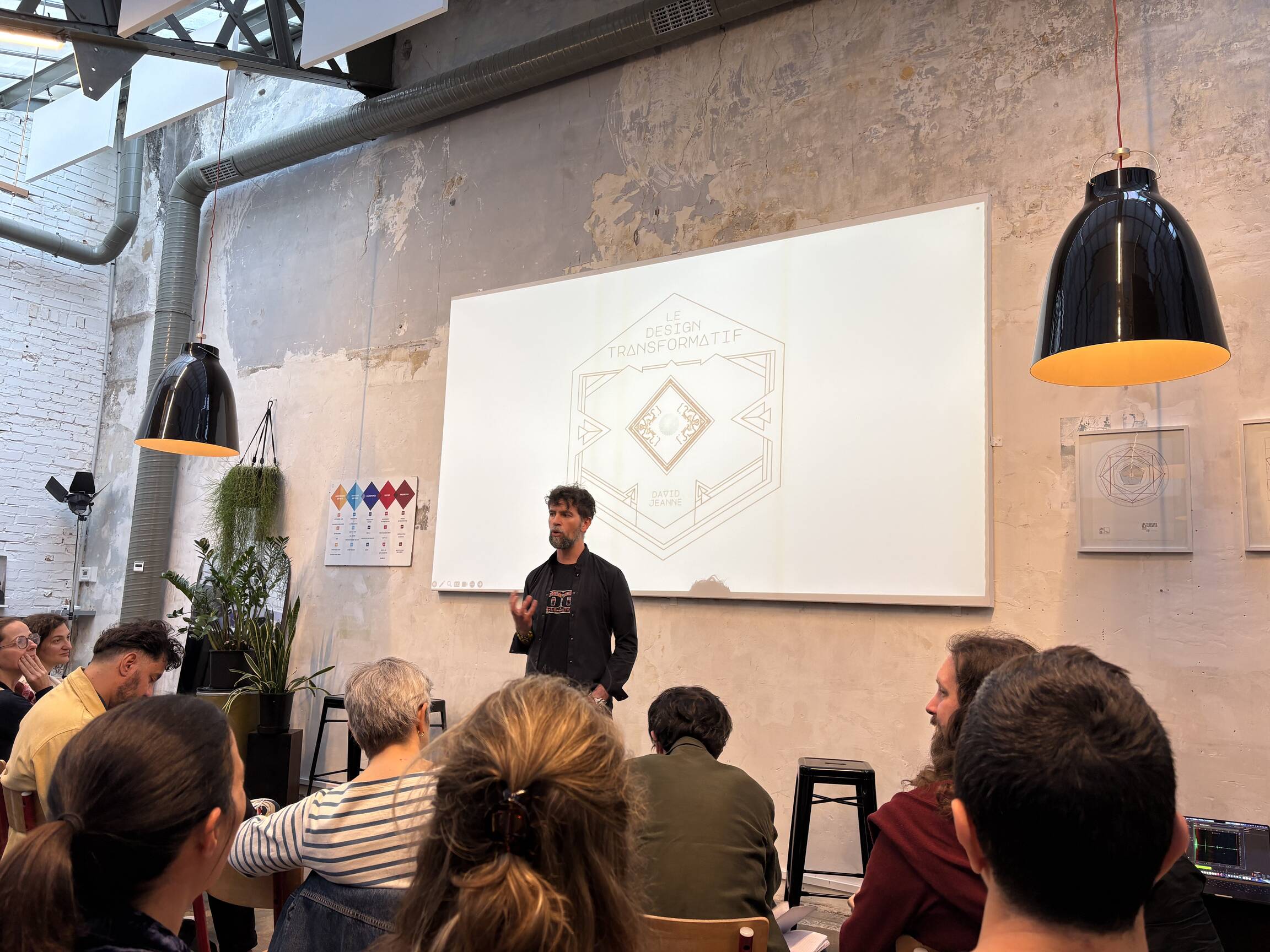
On April 30th, at Le Laptop in Paris, an event took place that broke away from the beaten path of classic Product Design: “Transformative Design: Don't just create uses, transform users”, presented by David Jeanne and organized by Jordan Thévenot.
In a room filled with around forty participants—designers, developers, and product specialists—the promise was clear: to question the current limitations of UX and propose a new direction. A direction where design no longer simply optimizes interfaces, but seeks to produce profound transformations for users.
From Experience to Transformation
Product design has long sought to make things simpler.
- Less friction.
- Less effort.
- Less complexity.
- Less waiting time.
It's a powerful promise. But it also has a limitation: by smoothing everything over, we sometimes end up smoothing over meaning itself.
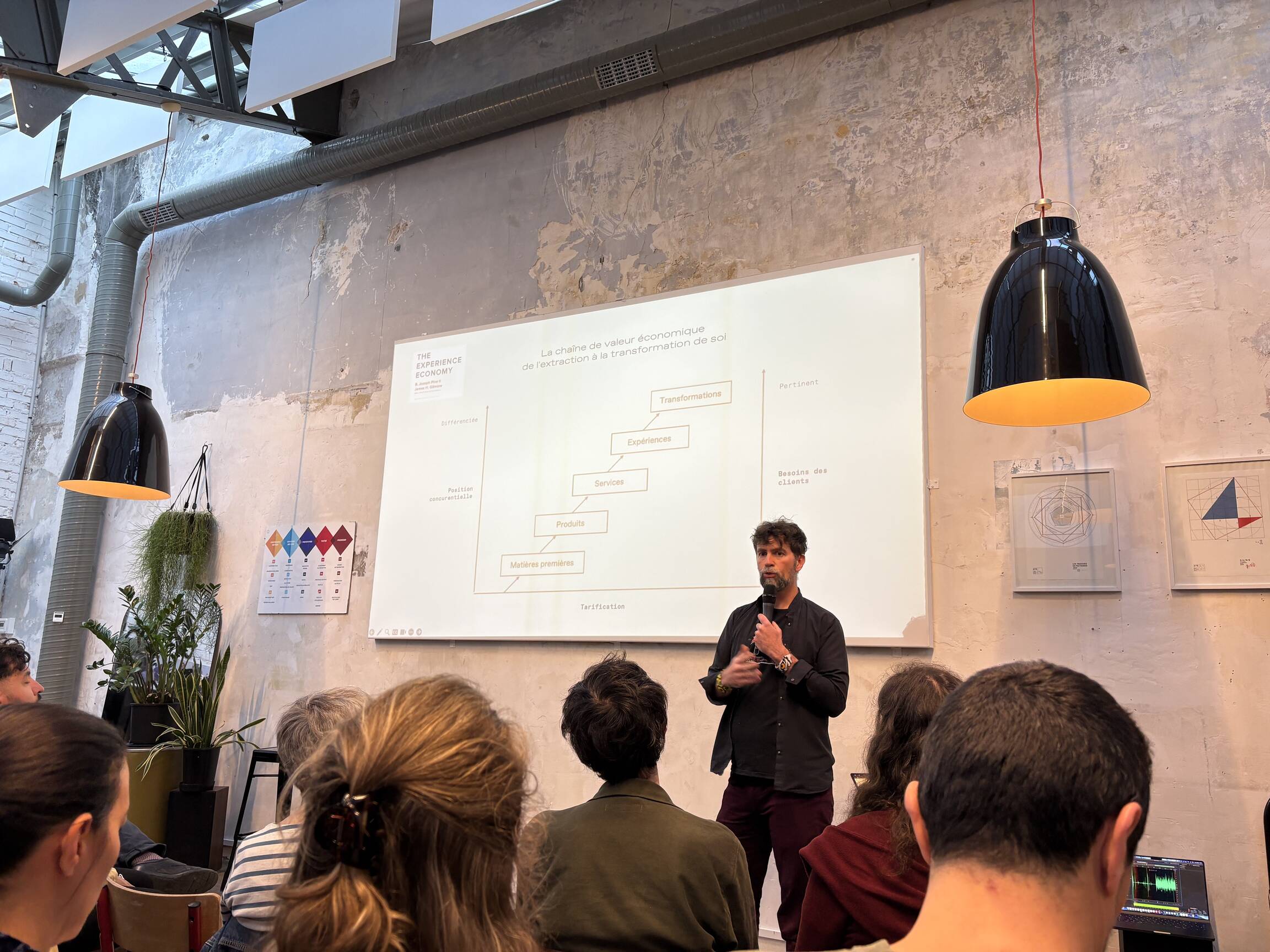
David Jeanne starts from an idea from The Experience Economy: the economy evolves in stages.
- We started by selling raw materials.
- Then products.
- Then services.
- Then experiments.
But when the experience itself becomes commonplace, what remains to differentiate oneself?
The proposed answer is powerful: transformation.
It's no longer just about selling a pleasant interface or a smooth user journey. It's about designing an experience that helps a person become someone else.
For example :
- to go from “I am not sporty” to “I take care of my body”;
- moving from “I am at the mercy of my money” to “I am building my future”;
- to move from “I am just a resource” to “I am an active participant in the project”.
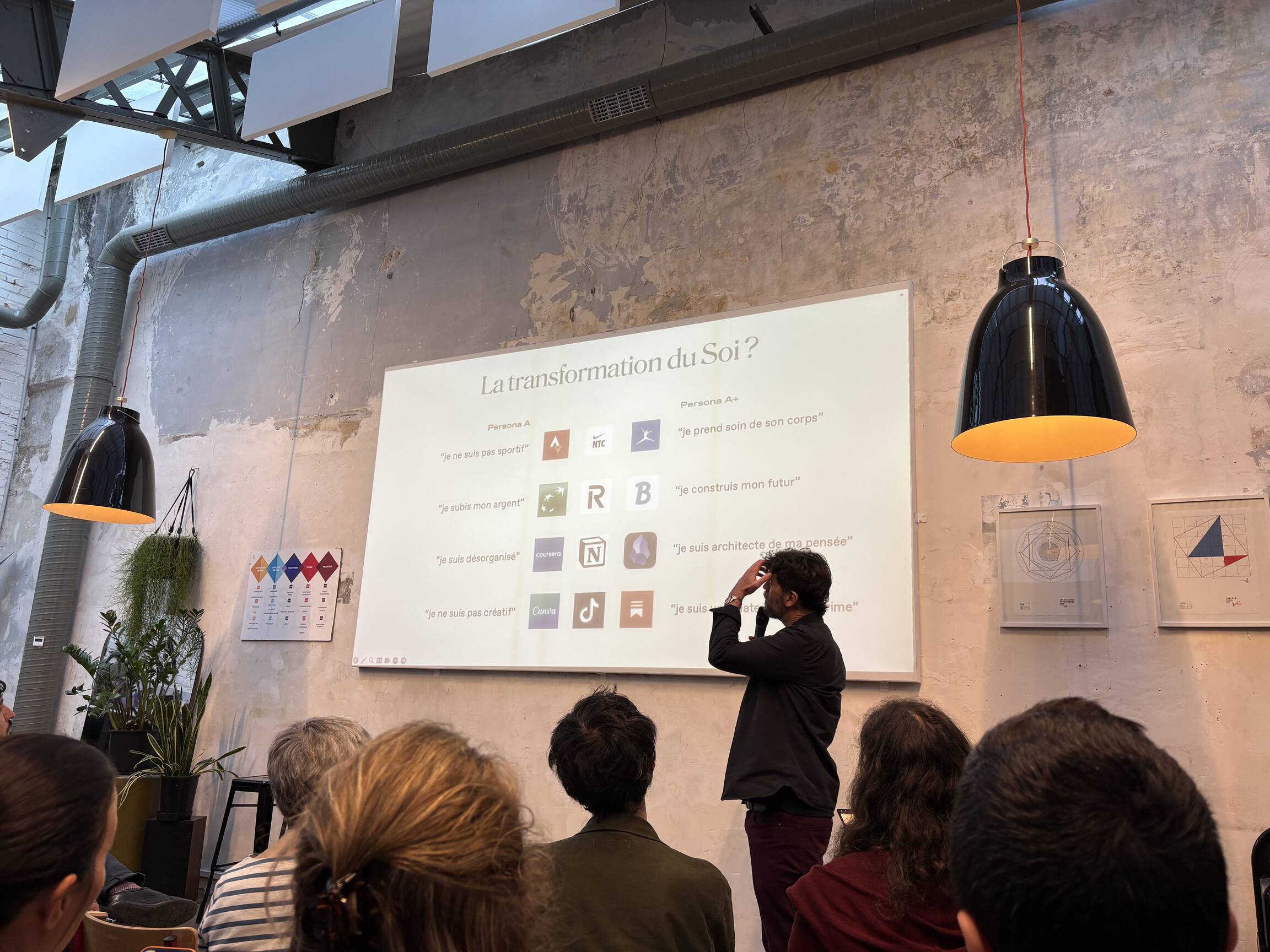
This is where design becomes transformative.
Designing a passage, not just a route
Classical design often works with a persona: their needs, their pains, their motivations.
Transformative design adds a deeper question:
How do we want to help this person to grow?
This completely changes the nature of the work.
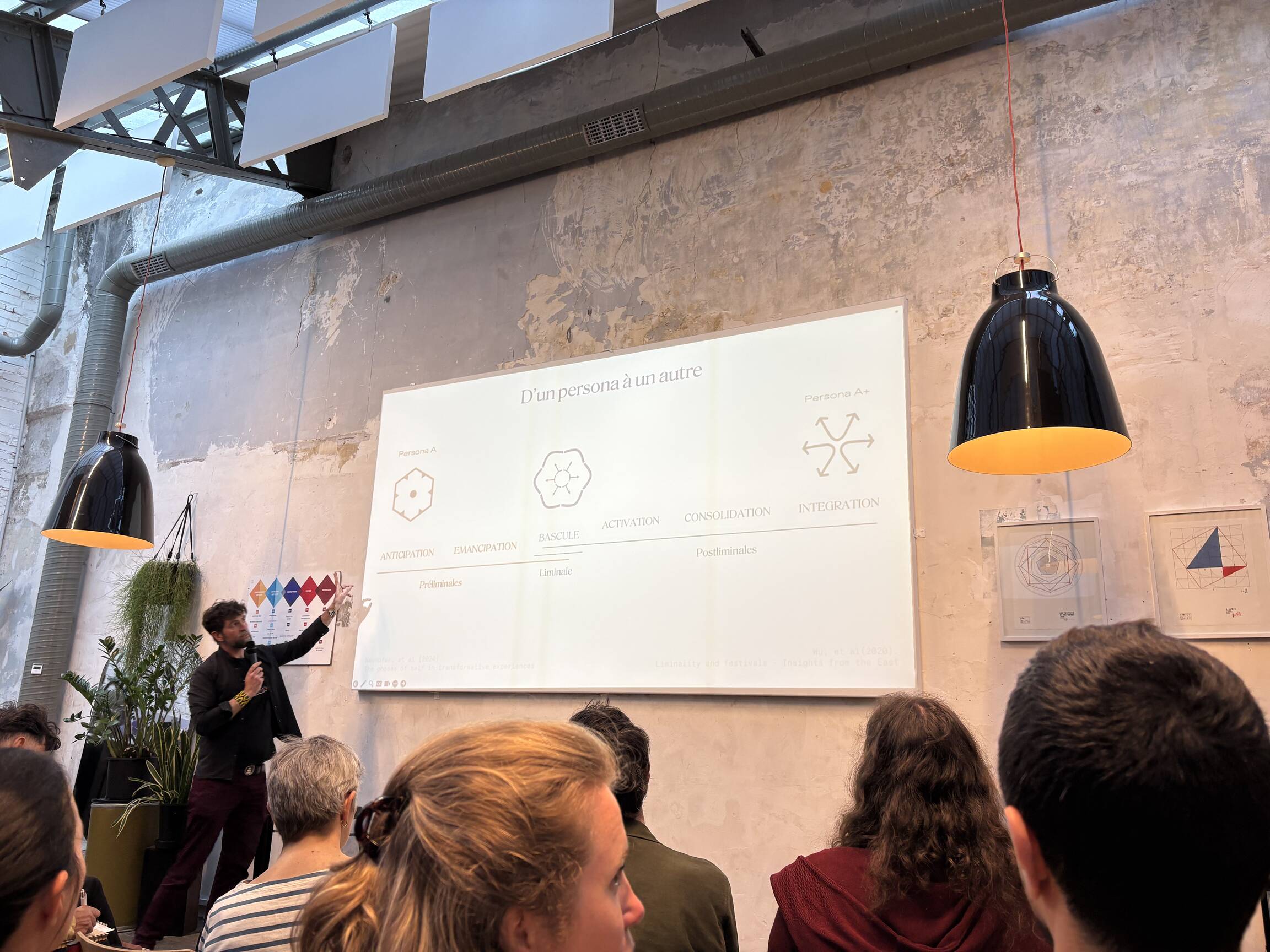
We no longer just design a user journey. We design a passage.
A passage between a current self and a possible self.
This transition can follow the structure of initiation rites: a preparation phase, a turning point phase, and then an integration phase. The goal is not simply to create a "wow" effect, but to create an experience that leaves a lasting impression.
The role of rituals, symbols and objects
One of the most interesting aspects of the conference is the importance given to symbols.
A transformation does not happen solely through rational arguments. It also happens through forms, gestures, objects, places, words, and postures.
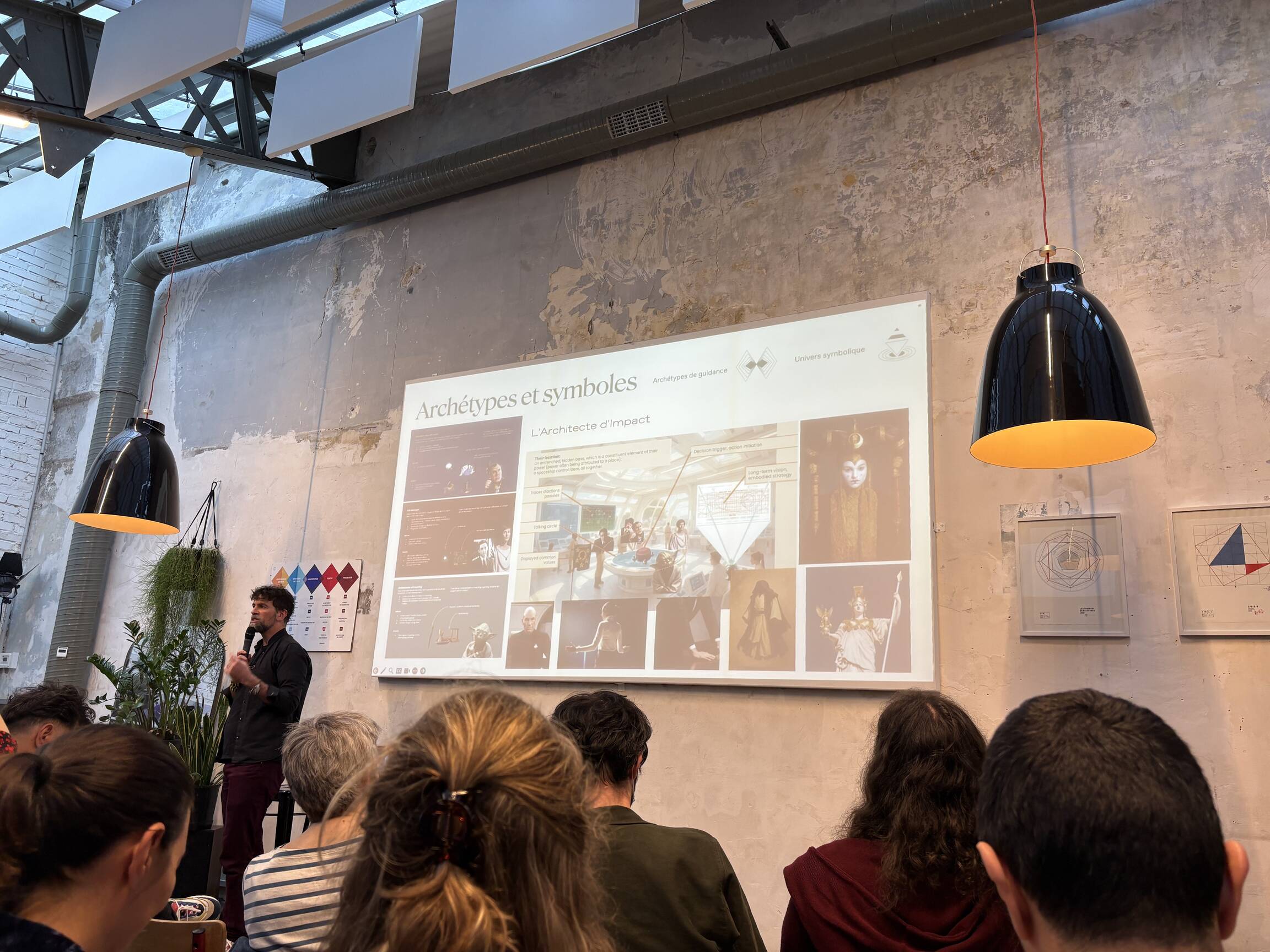
In the example presented, a simple, traditional meeting was transformed into a ritualistic moment. The chairs disappeared, a large strategic map was placed on the table, and the computer was put aside. The client was no longer simply someone who "gave a brief." They gradually became a strategist.
And this change in physical posture can trigger a change in mental posture.
This is a key idea: design transforms not only by what it explains, but by what it brings to life.
Preserve, amplify, help, dissolve, transform
David Jeanne presents an interesting matrix for deciding what to do with the existing elements in the experiment.
Certain elements must be preserved, as they ensure the psychological safety of the user. Others need to be amplified, because they are already moving in the direction of the desired transformation. Others need help when they are simply irritants to be removed.
Then come the deeper dimensions:
- dissolve certain reference points;
- to transform certain identity-related blockages.
This is where transformative design differs from traditional UX. It doesn't just aim to reduce problems; it seeks to identify what prevents a person from changing their perspective on themselves.
A central ethical question
Such a design obviously raises a question: how far can we go?
While design can transform, it can also manipulate.
The conference emphasizes this point: the model presented aims for empowerment, not subjugation. But this imposes a strong requirement regarding consent, protection, and intent.
Designing a transformation is not a neutral process.
This is likely one of the major topics of the coming years, especially with the massive integration of AI into digital products. Interfaces will become more adaptive, more personalized, and more persuasive. The line between guidance and manipulation will become increasingly blurred.
My takeaway for Darkwood
This conference resonates strongly with the topics I explore around Darkwood, Flow, and automation.
Today, many tools aim to save time. But save time for what purpose?
A good product shouldn't just automate a task. It should help its user change their approach.
- To go from consumer to creator.
- To move from executor to architect.
- To go from spectator to player.
- To go from being overwhelmed to being able to orchestrate their own systems.
This is probably where part of the value of future products lies: not in the total elimination of effort, but in the design of efforts that transform.
Conclusion
Transformative design encourages us to move beyond a purely utilitarian view of the product.
- A product can be more than just a tool.
- It can become a ritual.
- A passage.
- A mirror.
- A trigger.
The question is therefore no longer simply:
“What use are we creating?”
But rather:
“What kind of person are we helping to emerge?”
Going further
David Jeanne has launched a campaign for his book dedicated to transformative design, which delves deeper into these concepts with concrete and operational methods.
👉 https://fr.ulule.com/design-transformatif-livre/