⚙️ Fosdem 2026: Signals From the Open Source Frontline
on February 1, 2026
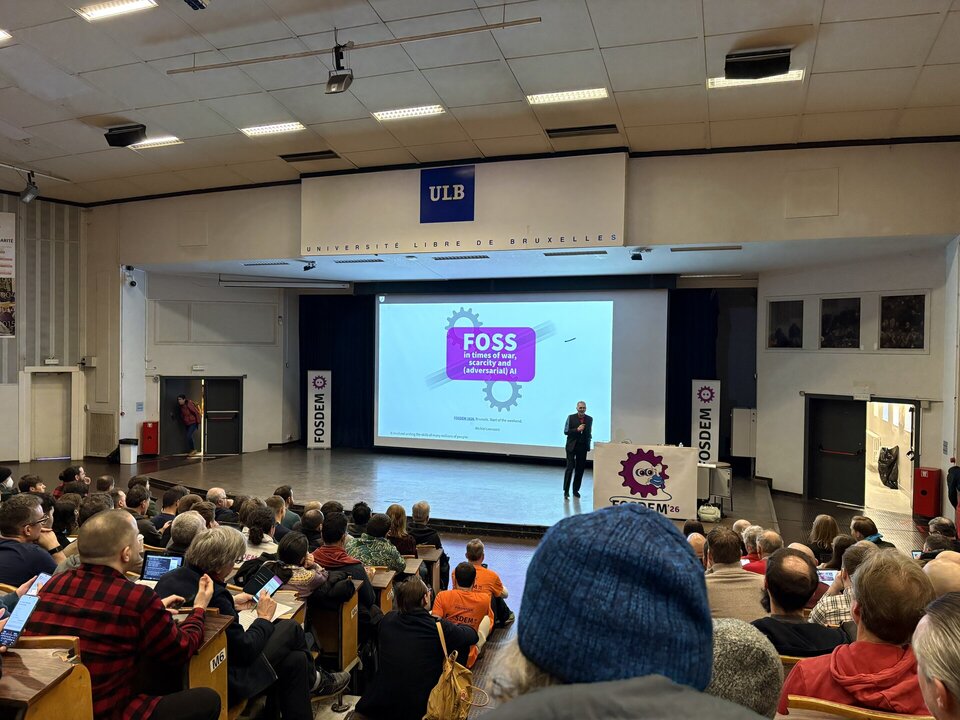
FOSDEM 2026 marked my first on-site participation in the event, limited to the Saturday sessions. What immediately stands out is the scale: dozens of parallel tracks, hundreds of talks, and a constant need to make trade-offs. It becomes clear very quickly that FOSDEM cannot be approached casually—without preparation, the sheer density of content turns into noise.
Spending a single day on site was enough to understand that the real challenge is not access to information, but selection. Choosing which rooms to prioritize, which talks to follow live versus asynchronously, and when to rely on the conference’s chat infrastructure becomes part of the experience. This article reflects that first-day perspective, combining direct observations with technical signals extracted from the sessions attended.
1. Opening Keynote and Digital Sovereignty
The opening keynote at FOSDEM 2026 framed digital sovereignty. A central concept introduced was "FOSS in times of war, scarcity and (adversarial) AI" or "strategic computer rental" describing the industry’s gradual shift toward cloud first strategies that optimize convenience at the cost of autonomy. This model reinforces structural dependencies on proprietary platforms, exposing users and organizations to unilateral changes, service shutdowns, or policy driven constraints.
From a systemic perspective, the software supply chain emerged as a primary attack surface. With an average European company depending on tens of thousands of software components, modern infrastructure increasingly resembles a Jenga tower: stable until a single, often invisible, block is removed. Incidents such as the XZ backdoor and similar long term infiltration strategies illustrate how supply chain weaknesses are exploited asymmetrically over time.
Rather than proposing regulation first responses, the keynote emphasized organizational structure as a core technical issue. In particular, steward owned organizations with explicit public interest missions were presented as a structural alternative to venture capital driven models, where short term exit incentives often conflict with long term infrastructure integrity.
2. Scale, Density, and the Need for Preparation
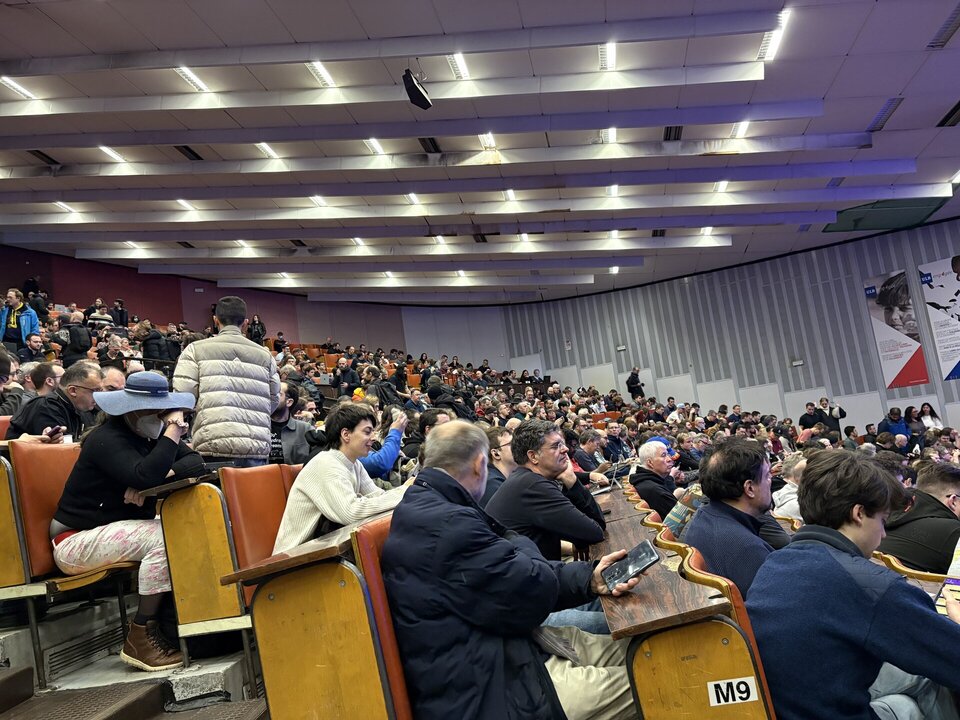
FOSDEM 2026 brought together more than 8,000 participants, with over 1,000 lectures across 65 devrooms, making it one of the densest open source technical gatherings in Europe. This was a first time attendance, limited to the first day only, which was sufficient to highlight a recurring constraint: FOSDEM cannot be approached opportunistically.
The sheer volume of parallel sessions makes real time decision making ineffective. Value extraction requires pre event preparation, including identifying specific tracks, speakers, and technical domains in advance. Without this, the conference quickly becomes an exercise in context switching rather than focused learning.
This density is mirrored in FOSDEM’s digital layer. The official chat platform, running on Matrix/Element and accessible via chat.fosdem.org, extends discussions beyond physical rooms. It acts as a coordination layer for last minute changes, technical follow ups, and asynchronous exchanges an essential complement when physical attendance alone is insufficient.
3. Tooling Evolution Over Hype
Several sessions confirmed a broader trend: meaningful innovation in open source currently happens in foundational tooling, not in product layer novelty.
Git v3 discussions focused on extreme scale constraints, such as repositories with tens of millions of references. The adoption of the reftable backend enables atomic updates and consistent reference views, addressing long standing filesystem limitations. Explorations around content defined chunking for large objects also point toward reintegrating capabilities previously offloaded to external systems like Git LFS.
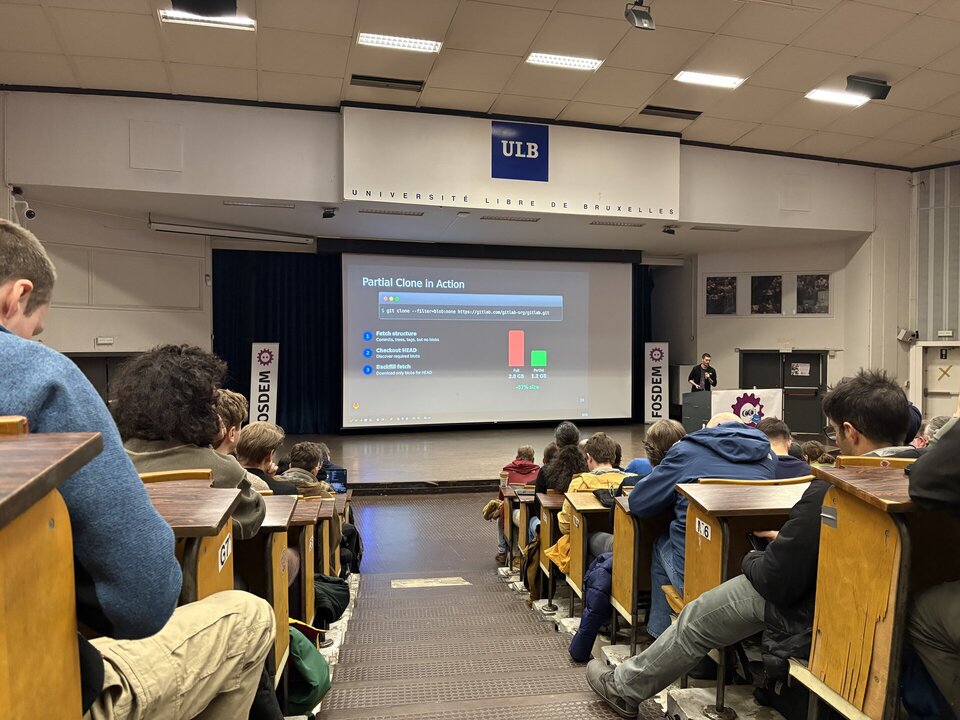
Similarly, Webview sessions emphasized portability and behavioral specification over new abstractions. Engineers are increasingly documenting platform divergences particularly between Android and iOS to define stable baselines for embedded web content. The interest in the Servo engine reflects a desire for decoupled, performance oriented components that are not tied to monolithic OS engines.
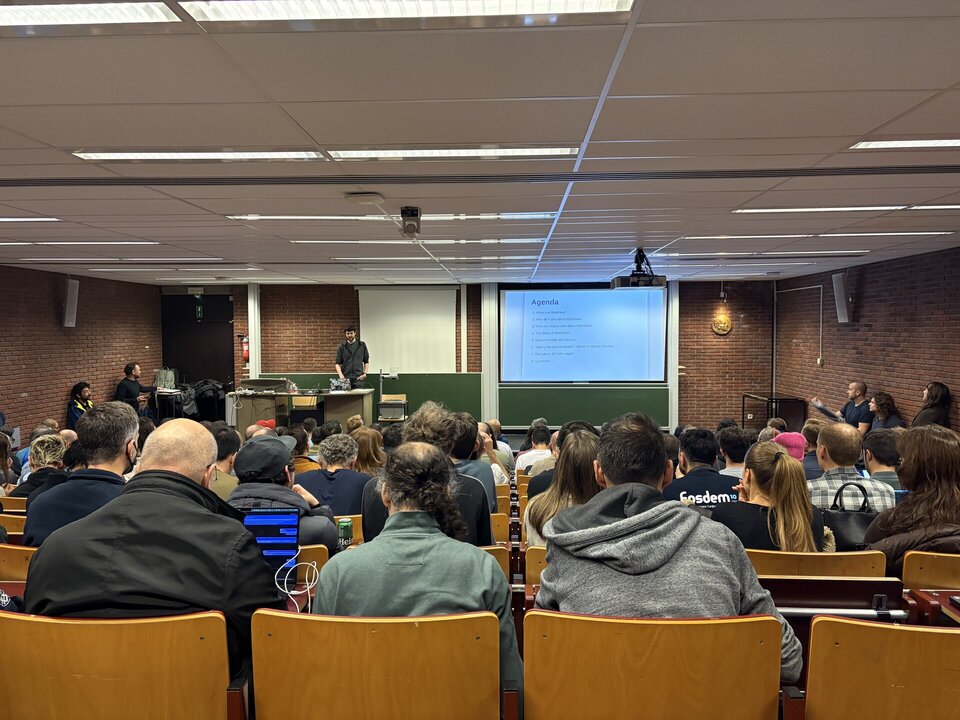
In both cases, the emphasis is on maintenance, predictability, and scale, not disruption.
4. Applied Systems Under Real World Constraints
The Botronics presentation illustrated what applied engineering looks like when theory meets physical constraints. Designing a consumer grade autonomous golf trolley with a target price around €5,000 forces constant trade offs between capability, reliability, and cost.
Key technical decisions were driven by operational reality:
- Migrating to Zenoh for shared memory communication reduced CPU usage by approximately 10%, improving thermal and energy efficiency.
- Balena was adopted for OTA updates to avoid the operational complexity of maintaining custom Yocto based images across a device fleet.
- Operating in uncontrolled outdoor environments shifted the focus toward robust localization and computer vision based obstacle detection, deliberately avoiding costly sensor stacks like LiDAR.
This was not a talk about innovation for its own sake, but about engineering discipline under constraint.
5. Direct Feedback Loops: The Joplin Case
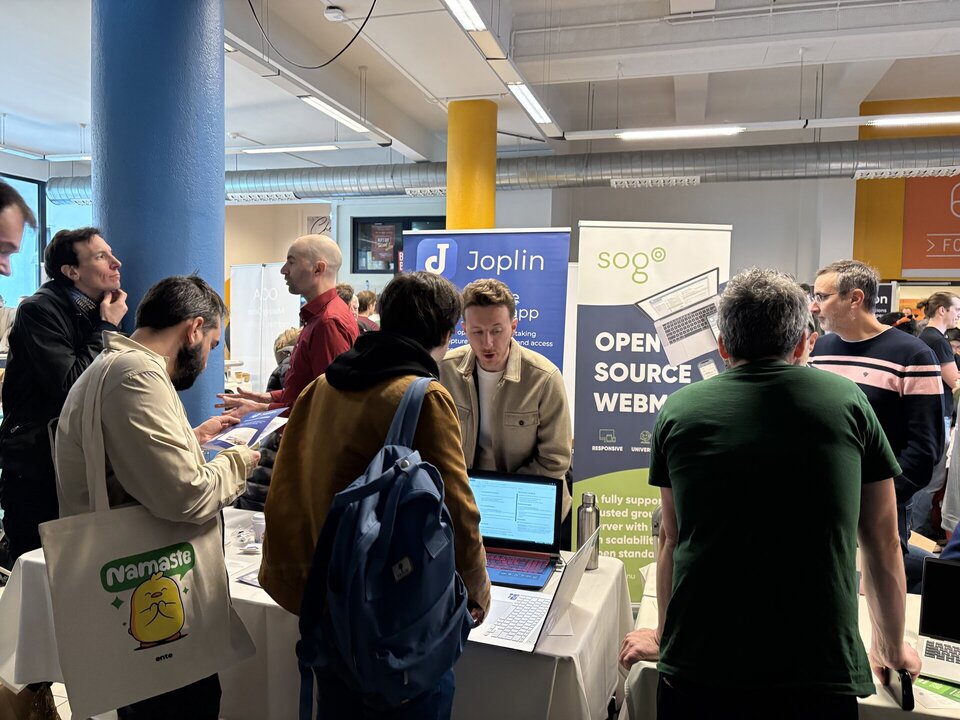
One of the structural strengths of FOSDEM remains direct access to maintainers. Conversations with Laurent Cozic, creator of Joplin, and Greg Lagarde, Marketing Lead at Joplin, provided concrete insight into the evolution of the project particularly the [open source Joplin web application](https://github.com/joplin/web app), currently in beta.
These exchanges enable feedback that goes beyond issue trackers, especially around synchronization models, cross platform consistency, and real world usage patterns. This aligns with prior Darkwood articles documenting Joplin as a daily knowledge management tool, including:
The interaction reinforced Joplin’s positioning as a sovereign personal knowledge system, where control over data, formats, and workflows remains central. You can have an overview on the Youtube channel.
6. Automation, AI, and the Toolchain Mindset
AI discussions at FOSDEM were notably pragmatic. Rather than framing AI as a cognitive replacement, several conversations echoed the keynote’s warning about delegating thinking itself, sometimes described as a path toward "digital dementia."
Instead, attention focused on AI as infrastructure augmentation:
- Using plugins such as Jarvis for contextual assistance within notes
- Exploring MCP based integrations to connect note systems with local or self hosted language models
- Keeping AI workloads local, containerized, and auditable, avoiding opaque SaaS dependencies
In this framing, AI is treated as a janitorial layer handling repetitive or structural tasks rather than as an authoritative source of truth.
7. Ecosystem, Campus, and Physical Reality
The presence of foundational distributions Ubuntu, Debian, Nix at FOSDEM highlights the layered nature of the open source ecosystem. These projects form the substrate upon which higher level innovation depends.
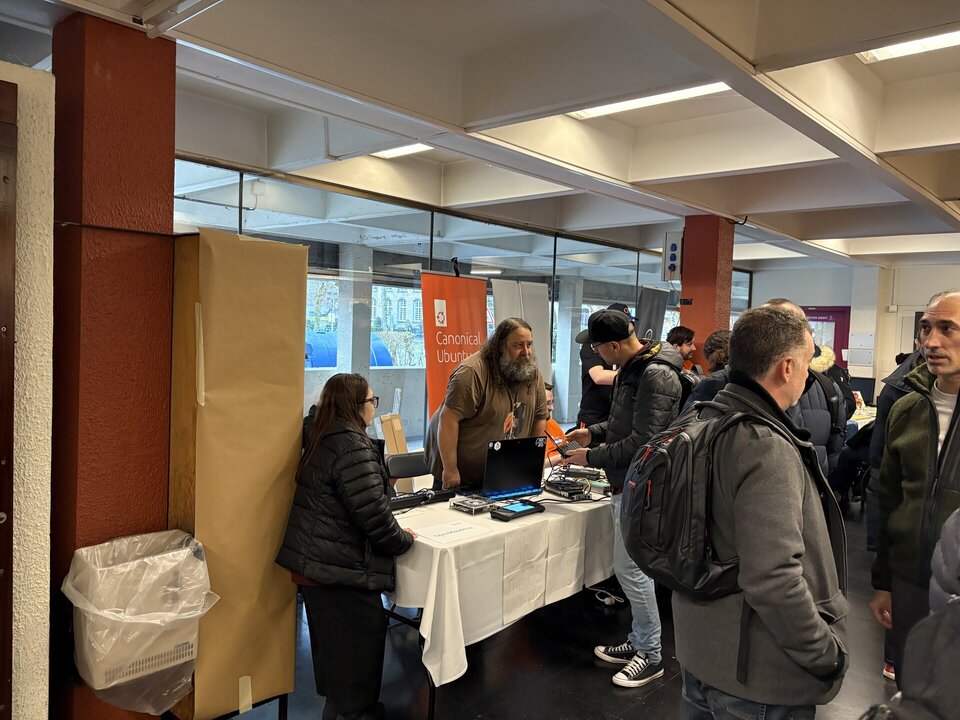
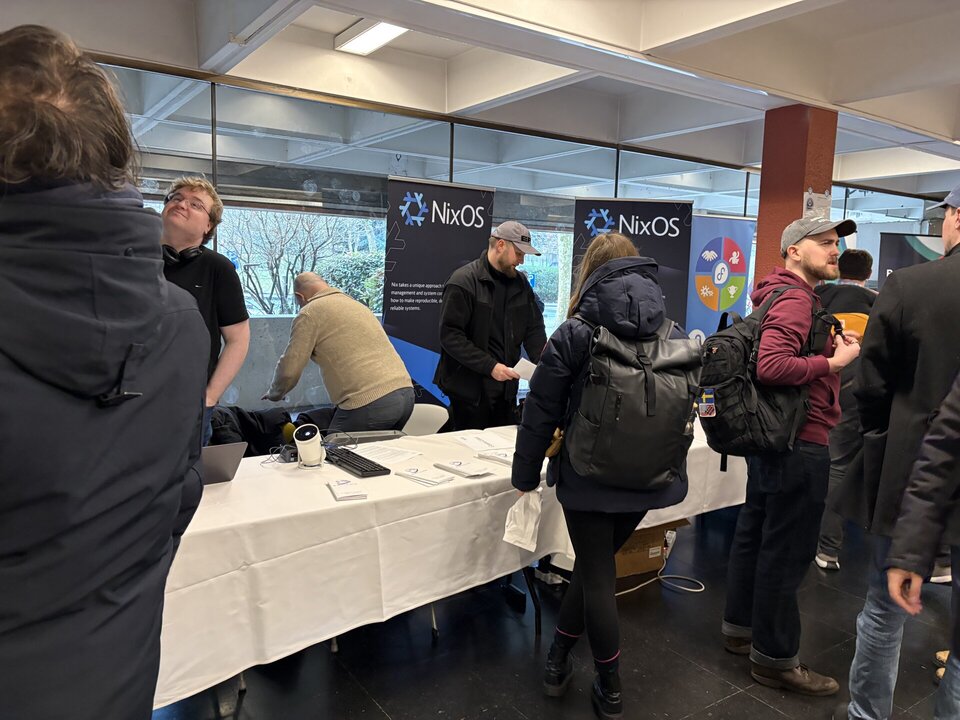
The Université Libre de Bruxelles (ULB) Solbosch campus, located roughly 30 minutes from Brussels city center via metro and bus, provides a fitting physical counterpart to this layered structure: large, decentralized, and occasionally challenging to navigate. Its scale reinforces the need for intentional movement both physically and intellectually through the event.
Beyond talks and stands, FOSDEM also functions as a convergence point for informal, in person encounters. These unstructured exchanges often surface governance concerns, long term project directions, and ecosystem tensions that rarely appear in formal presentations.
Conclusion
FOSDEM 2026 confirms a broader shift within open source: away from fragmented innovation and toward integrated, resilient, and sovereign infrastructures. The most critical work today happens in areas that are often considered unglamorous tooling, maintenance, governance, and dependency management.
Extracting value from such an ecosystem requires preparation, selectivity, and ecosystem literacy. FOSDEM does not reward passive consumption. It rewards those who approach it as a system to be navigated, not an event to be attended.