✈️ Hellcats Over The Pacific — Reconstruct a 1991 game with AI, without writing a single line of code
on November 24, 2026
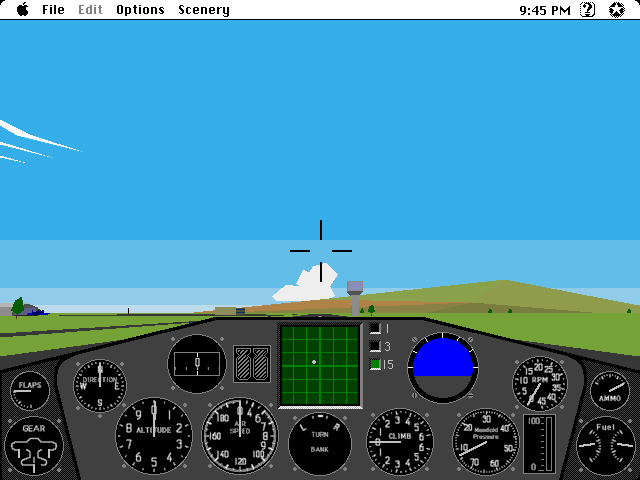
Last March, I was mainly planning to open the archives of a 1991 Macintosh game. A few months later, Hellcats Over The Pacific runs in Godot and can be launched in a browser.
I personally did not write any of the C or GDScript functions required for this reconstruction. Claude Code carried out the development work based on my instructions; Ghidra made the Motorola 68000 code analysable, and Godot provided it with a modern environment. My role was different: to understand the original machine, to choose a direction, to break the problem down, to guide the AI, and to verify each result.
Playable Demonstration
Open the demonstration in a new tab
This demonstration loads the current Native scene. It is a work in progress, not an official re-release nor a promise that every mission already behaves exactly as on the original Macintosh.
1. From the first article to the reconstruction
The first article, published March 30, 2026 told the opening of the archives. At that time, the project mostly consisted of locating the disks, inspecting the files with ResEdit, and beginning to understand what a classic Macintosh executable still contained after thirty-five years.
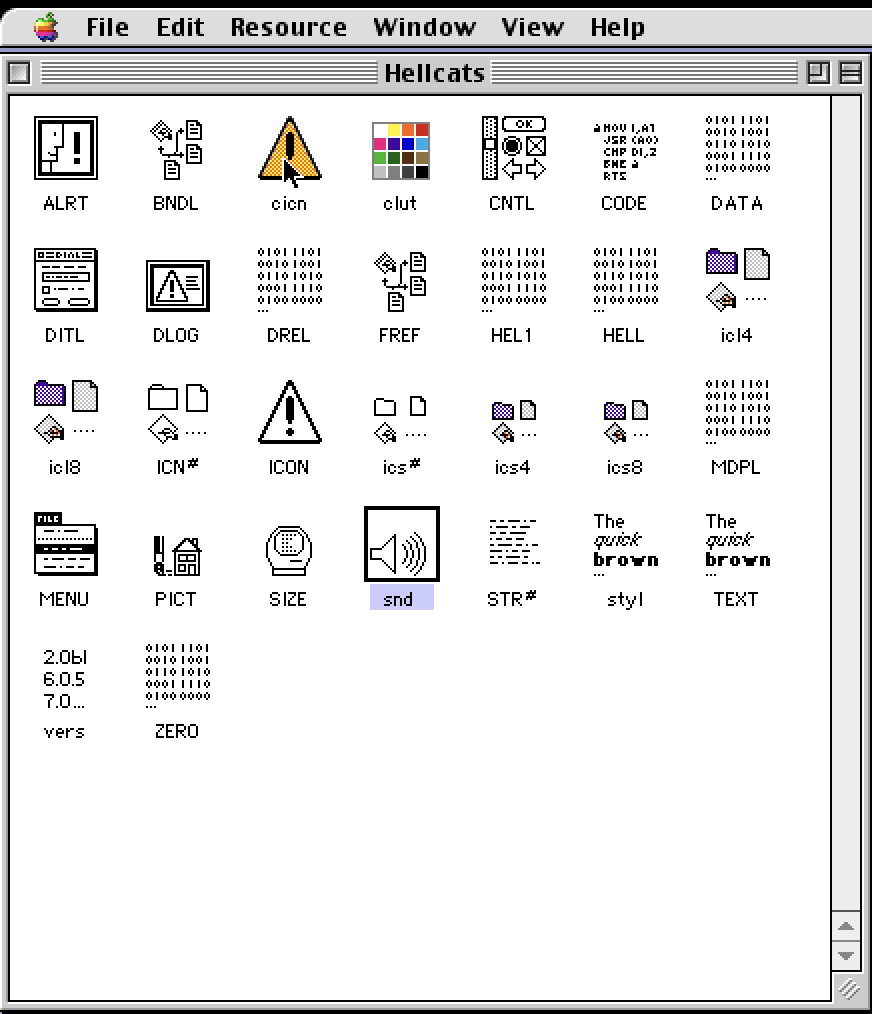
Hellcats was written for a Motorola 68000 processor, the memory and the Toolbox of the classic Macintosh, its windows, its events, its display and its sound. A 1991 Mac and a 2026 computer do not speak the same language. It was therefore not enough to copy the program or redo its graphics. I wanted to recover its logic and reconstruct the services it needed.
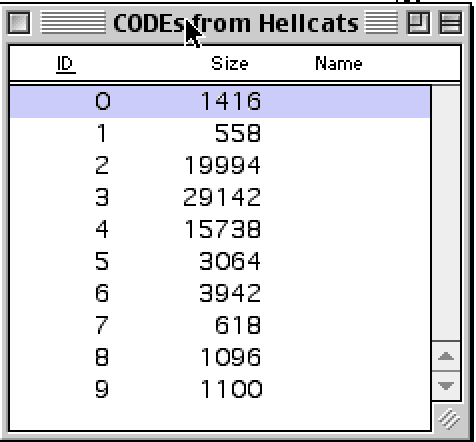
ResEdit extracted the menus, dialogues, images, sounds and code segments. Ghidra opened a view into the 68k assembly. Claude Code connected these clues and gradually transformed the analysis into executable code. Godot became the place where these layers could come together.
2. Three versions to bring Hellcats back to life
The project currently contains three complementary approaches. They answer three different questions: how to recover the original behavior, how to gradually move away from the old Macintosh, and then how to adapt the result to current devices?
Original — Reconstruct the Macintosh expected by the game
Original is the historical reference of the project. This version takes the logic from the 1991 program and rebuilds around it the necessary Macintosh: 68k memory, loading of segments, used parts of the Toolbox, windows, events, inputs, indexed display and sound.
This is not a complete image of Mac OS 9 launched in Godot. Unlike a general emulator such as InfiniteMac, Original reconstructs only the hardware and the services actually requested by Hellcats. The translated program thus finds its environment again without its rules being reinvented.
Native — Gradually replacing the old environment
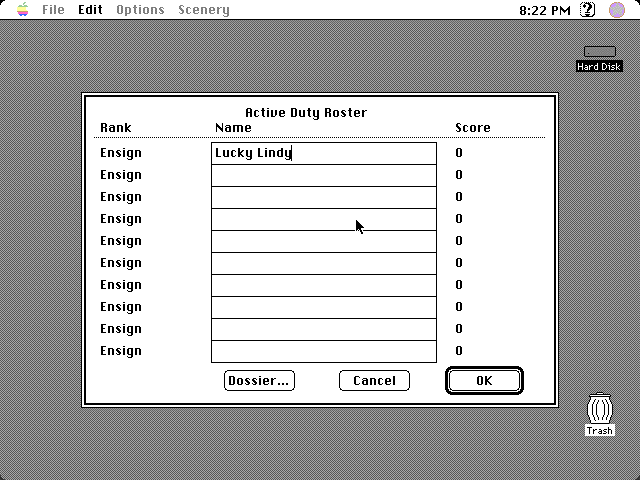
Native preserves the rules of Original, but gradually replaces its historical dependencies with Godot. Commands are remappable, menus and dialogues can use the engine's interface, saves have their own storage, and several elements of the screen, sound, camera, AI and game state are already modernized.
“Native” does not simply mean “compiled for macOS or Linux.” It describes a migration that is still partial: the scene inherits from Original and many Macintosh services remain. Each replacement must produce the same observable behavior before the old layer disappears.
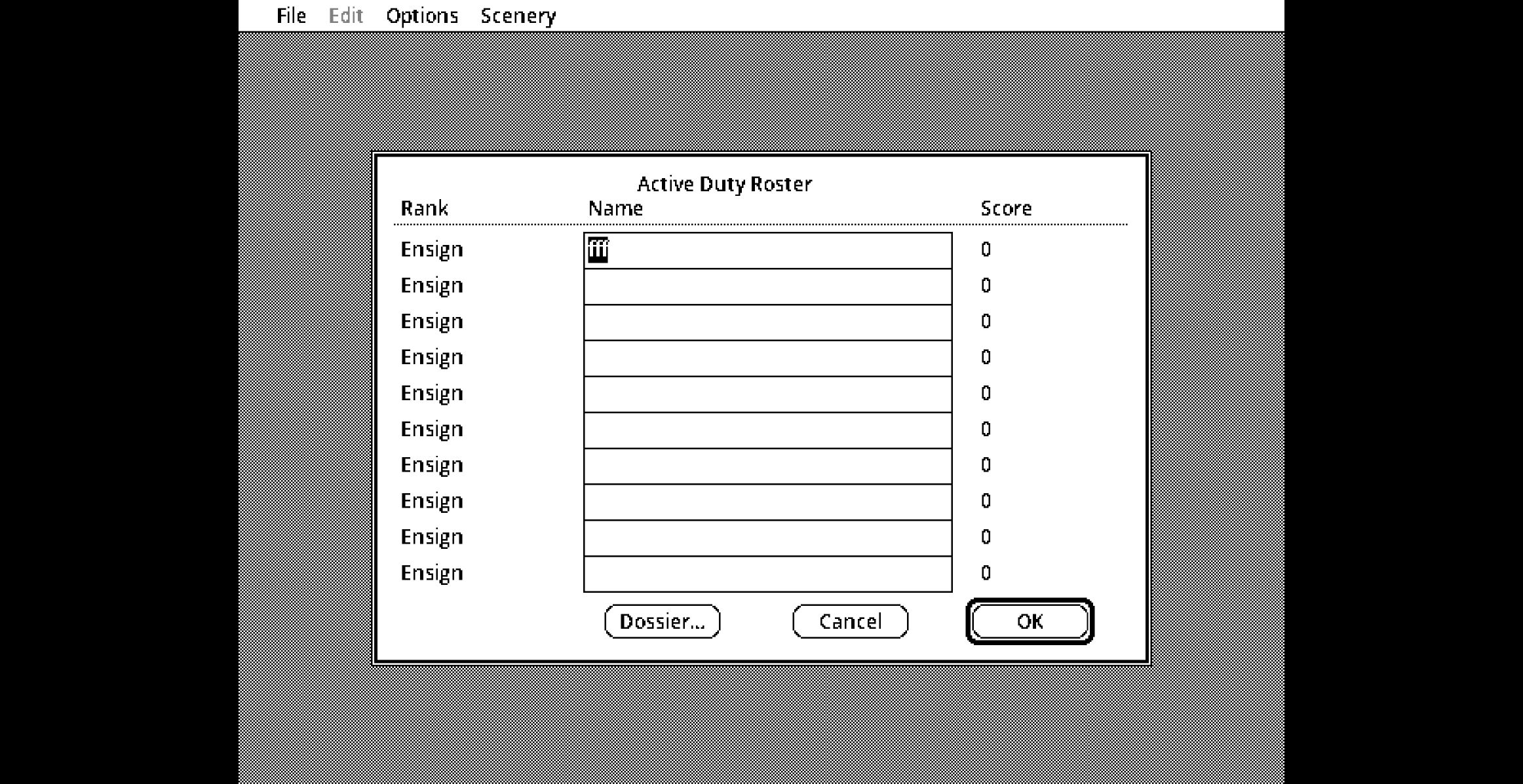
Enhanced — Adapting Native to modern usage
Enhanced builds on Native and adds optional improvements. At this stage, work is mainly on mobile: a landscape touch controller, interface adaptations, and proper background handling so that flight does not continue while the application is hidden.
The Android export has been tested in an emulator up to the start of a flight, with touch controls. The iOS export reached the cockpit and resumed after a backgrounding in the simulator. This result is not validated on a physical iPhone; a full touch mission and iOS audio remain to be verified.
Enhanced is therefore not, today, a graphical remaster. It is the layer that enables exploring new usages without silently altering Original or Native.
| Version | Principle | Current Objective |
|---|---|---|
| Original | Reconstruct the Macintosh environment, the 68k quirks and the necessary historical services | Retrieve and preserve the original game's behavior |
| Native | Gradually replacing this environment with Godot's services and states | Make the same rules work with modern technologies |
| Enhanced | Add optional adaptations to Native, notably touch and mobile | Allow play on more devices without altering the reference |
3. Three historical versions analyzed
The reconstruction does not rely on a single executable. Three corpora had to be studied separately.
Hellcats 1.0.3 constitutes the main base. Its diskettes, resources and code segments provided the most complete chain, from ResEdit and Ghidra to the GDScript executed by Original.
Hellcats 1.0.4 is reconstructed from 1.0.3 and its original updater, which brings, in particular, another sound driver and some modified resources. It can be selected at startup and preserves its own audio path.
Leyte Gulf is more than just an additional backdrop. The expansion has its own application, its resources, a different memory organization, and a larger overlay. Part of the code was moved or rewritten: we had to establish correspondences rather than copy 1.0.3. The work reaches takeoff, flight, crash, replay and debriefing of a lost mission, but not yet all objectives nor a genuine victory path.
These three cases reminded of an important rule: two versions that look very similar on screen can require different analyses under the hood.
4. Ghidra, Claude Code and Godot: how I proceeded
Ghidra, Claude Code and Godot each played a distinct role.
Ghidra reads the Motorola 68000 instructions and produces a representation close to C. It does not resurrect the source code: names, comments, types and intentions have partly disappeared. A decompiled function shows what the machine does, not necessarily why.
Claude Code examined the callers, the data and the resources, proposed understandable names, identified structures, and then translated the logic into Godot. He could go through many more files than I would have manually while maintaining the relationships with the binary.
I never considered his responses as proofs. The original artifacts remain intact and each step is connected to the previous one. In case of divergence, we must go back to the bytes, the resources or the observable behavior.
Godot provides the execution loop, the inputs, the audio, the display and the modern exports. The same project hosts Original, the Native migration and the Enhanced adaptations. The Web build finally lets you try the result without an old Macintosh.
5. Reconstructing without writing a line of code
I personally did not write any line of the C or GDScript functions for this reconstruction. Claude Code did the development based on my prompts.
That does not mean the work happened by itself. It was necessary to understand the original system to ask the right questions: what belongs to the processor, to the Toolbox or to the resources, what must remain identical, and what can be entrusted to Godot.
My role was that of an architect and technical pilot: to define objectives, break down steps, choose sources of truth, formulate requests, examine gaps and correct direction when it led to imitation rather than actual functioning.
The precision of prompts mattered. “Recreate the game in Godot” would have produced only an approximation. A useful request, on the contrary, sets a boundary: preserve the original files, analyze a single layer, cite the evidence, keep the uncertainties visible, obtain an observable result, then compare this result with the reference before continuing.
AI did not replace technical understanding. It replaced a large portion of manual programming. Without knowledge of architecture, it would have been difficult to spot confusion between 68k memory and Godot state, or between decompilation and the original source code.
6. The major steps of the reconstruction
The method worked because I never asked the AI for the game “in its entirety.” Each step had to deliver an observable and comparable result.
-
Preserve artefacts. I started by gathering the diskettes, applications, resources, versions and updater without modifying the originals. They remain the reference when an interpretation needs to be reviewed.
-
Understand the machine. Before reconstructing the software, it was necessary to identify the processor, memory organization, program formats, system services, graphics, sound and inputs of the classic Macintosh.
-
Extract and decompile. ResEdit made the resources visible. Ghidra transformed the 68k assembly into a C-like representation, easier to traverse but still lacking the names and context of the lost source code.
-
Analyze relationships. Claude Code linked the functions to their callers, the data and the resources they manipulate. The names and structures recovered remain conclusions to be substantiated, not a truth created by the model.
-
Reconstruct layer by layer. The work began with loading resources and memory, then startup, the first screens, interactions, the simulation and the missions. This progression avoids masking ten errors behind a final result that is impossible to diagnose.
-
Obtain an observable result. A dialog opens, a screen is drawn, or an airplane responds to commands, forming a milestone. Each result reduces the area of uncertainty before the next step.
-
Compare behaviors. A visually similar image is not enough. One must verify actions, transitions, calculations and effects produced relative to the historical program. When a discrepancy appears, the correction should target the responsible layer.
-
Migrate and export. Once Original is sufficiently established, Native can replace the historical dependencies one by one. Enhanced can then adapt this base to touch and mobile. Godot finally makes Web, desktop, Android and iOS possible, subject to actually validating each platform.
This breakdown makes prompts more effective: AI works better with a verifiable source, a clear boundary, and a concrete success criterion.
7. Why this method could serve other games
The principle is transferable: recover binaries and resources, understand the original computer, disassemble or decompile, have the results analyzed by an AI, reconstruct the necessary environment, compare the behavior, then migrate to a modern platform.
That does not mean any game can be automatically restored. A protected program, an unknown format, missing data, a poorly documented processor, or the absence of a functional copy can make the task much more difficult. The rights to redistribute historical resources also pose a question separate from technical success.
The approach mainly requires a person capable of guiding the investigation. You must recognize the limits of decompilation, know when an hypothesis is not proven, and prevent AI from filling gaps with a plausible but unfaithful solution. The method is reproducible in principle; its cost and chances of success depend on the available evidence.
8. What works today
Original now runs in Godot the reconstructed logic of Hellcats, with its resources, its dialogues, its rendering, its sound and its missions. The project preserves the path that links the 68k bytes, the Ghidra output, the semantic interpretation and the executed GDScript.
Native already has remappable commands, Godot interface layers, separate saves, and several modern subsystems, but still largely depends on the Original environment. The Web demonstration is therefore a milestone of this migration, not its culmination.
Enhanced adds the first mobile uses. Android was exercised in an emulator and iOS in a simulator. No result on a physical iPhone has yet been claimed, and a full touch mission remains to be explored.
Version 1.0.4 is rebuilt from its updater and can be launched separately. Leyte Gulf has progressed a lot, but all its scenarios and systems are not yet validated. Finally, even a large number of automated comparisons does not replace visual and functional verification on all paths of the game.
These limits do not diminish the result. They simply indicate where today’s observations stop.
Conclusion — Understand before rebuilding
I started with a game whose machine, tools and source code had disappeared from common use. I now arrive at a Godot project that offers three paths: Original to preserve the historical behavior, Native to gradually liberate it from the Macintosh, and Enhanced to adapt it to new devices.
I did not write the code that made this possible. I built the method, chose the evidence, guided Claude Code and verified the results with the artifacts and available tools. This distinction is important: AI can take on a substantial amount of programming, but it does not alone decide what constitutes a faithful reconstruction.
This project has taught me most of all that you must understand before asking to rebuild. Knowledge of the original system remains the compass. Ghidra makes the past legible, Claude Code turns analysis into executable work, and Godot opens the modern platforms. It is their combination, guided step by step, that allowed Hellcats to fly again.
References
- First article — opening of the archives
- Current source code in the Darkwood monorepo
- Ghidra
- Claude Code
- Godot Engine
- Native Web Demonstration
Join the Darkwood community
Thanks to guy0naBuffal0 for nudging me about the progress of Hellcats on the Darkwood Discord server. This nudge gave me the opportunity to resume the project, measure how far it has come, and prepare this demonstration.
Join the Darkwood Discord server to follow the reconstruction's progress, discuss the project, and share your feedback.
Hellcats Over The Pacific and its historical resources remain the property of their rights holders. This independent project documents a research and reconstruction process; it does not constitute an official or authorized version of the original game.