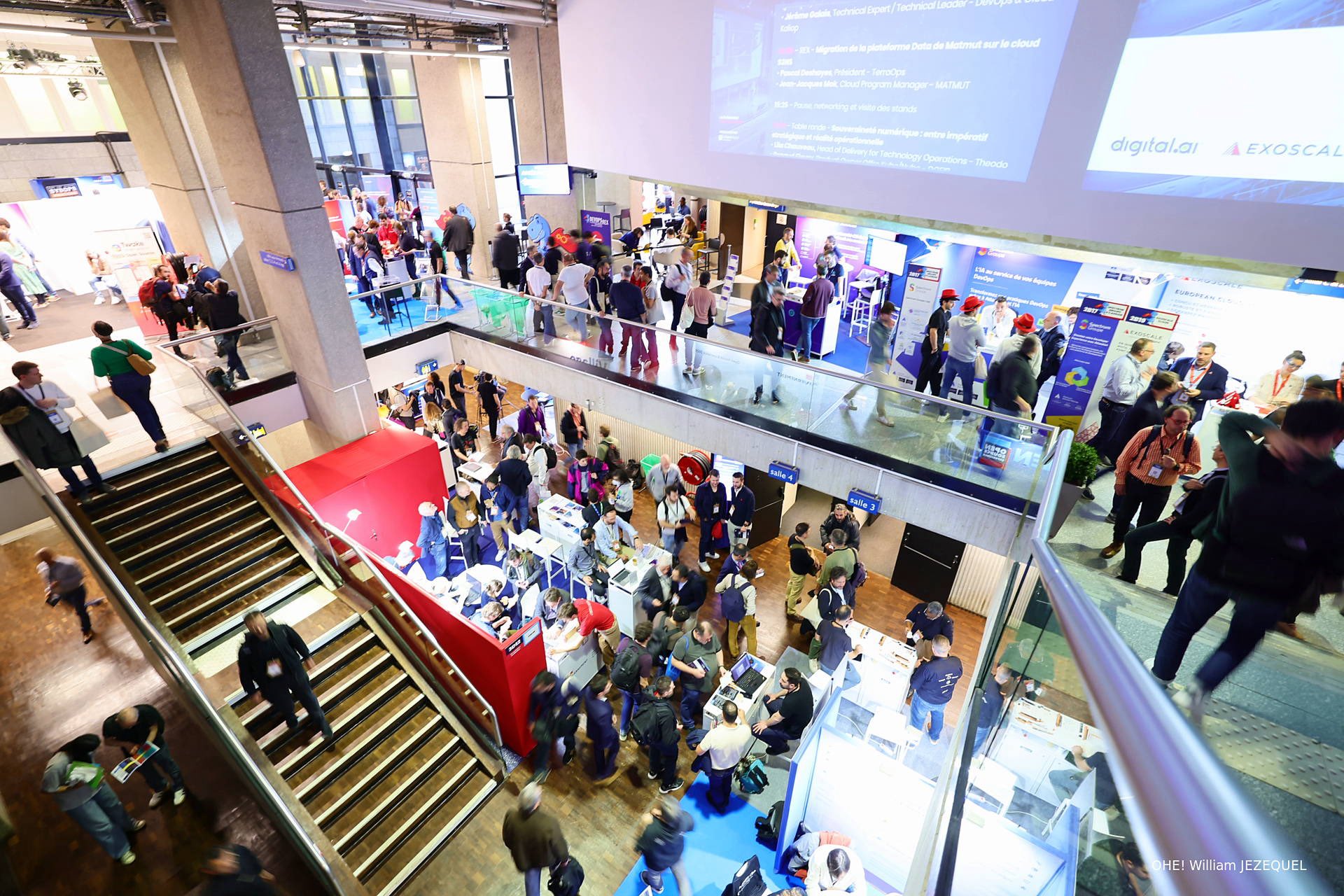
🏛️ Open Source Experience 2025: an ecosystem that is organizing itself, asserting itself and accelerating
on December 12, 2025
Each edition of Open Source Experience acts as a revealer: that of an open ecosystem which is no longer just a counter-model to proprietary software giants, but a structuring force for European competitiveness, sovereign innovation and the digital transformation of organizations.
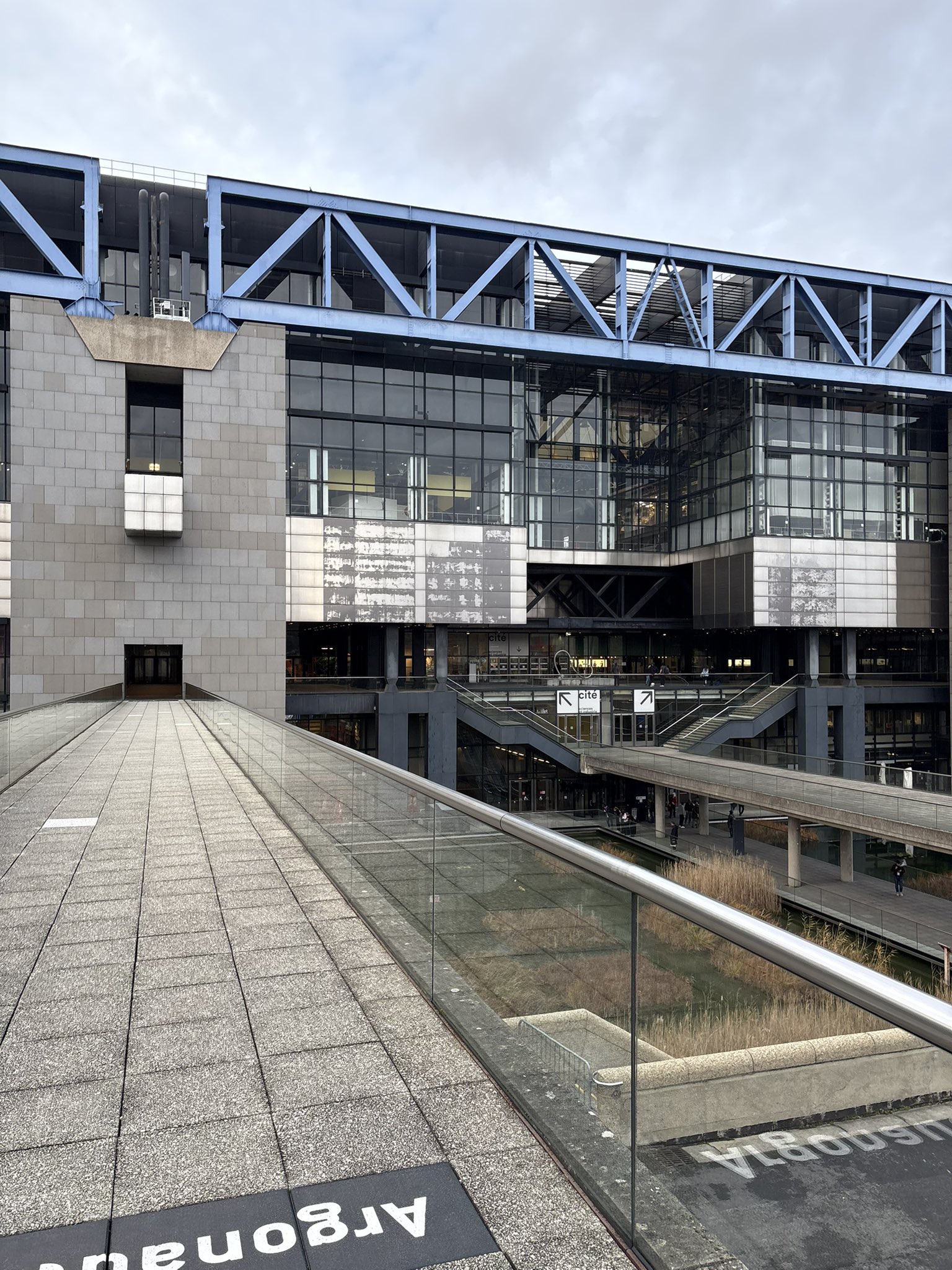
The 2025 edition, organized on December 10 and 11 at the Cité des Sciences, confirms a fundamental trend: open source is no longer a technical choice among others, it has become a strategic infrastructure, a proven economic model, and a major lever for autonomy in the face of digital dependencies.
In this article, I summarize the key trends, weak signals and lessons that seem to me to be major for understanding the evolution of free software in Europe.
#1. Open Source as an instrument of sovereignty
From the opening plenary session, the tone was set: free software is no longer a technical issue, but a geopolitical one. The interventions of Cristina Caffarra (EuroStack), Stefane Fermigier (APELL), and Laurent Tréluyer (CNAF) reiterated an obvious point: dependence on American platforms is no longer sustainable.
Key points:
- Europe must regain control of its digital infrastructure. * Free software is the most credible foundation for building sustainable alternatives. * Initiatives like EuroStack, APELL, OpenInfra, and the future IPCEI Cloud (€3 billion investment) demonstrate unprecedented political will.
This is a changing era: open source is moving from the status of "best practice" to the status of strategic necessity.
#2. The explosion of sovereign stacks: cloud, workplace, IAM, communication
This edition reveals a massive movement: the reconstruction of a complete European digital stack.
Among the key structural elements visible in the program:
- Proxmox VE as an open alternative to VMware * OpenNebula, OpenStack, and Kubernetes for a federated European cloud * BlueMind, Nextcloud, CryptPad, and eXo Platform to replace Microsoft 365 * Keycloak, LDAP, and LemonLDAP::NG for IAM * Zimbra/Beezim, XiVO, Linphone, and Matrix/Element for sovereign communication
Each of these building blocks demonstrates the same trend: 👉 to definitively decouple collaborative practices from dependence on GAFAM.
The future European workplace is already here: modular, interoperable, and designed around open standards.
#3. Open source AI is scaling up
AI plays a phenomenal role in the 2025 edition, but an open, controllable, auditable, interoperable AI.
Among the most memorable sessions:
- vLLM on Kubernetes (France Travail): industrialization of sovereign AI architectures * MCP (Model Context Protocol) applied to the cloud: AI assistants managing the infrastructure * Shapash: open-source explainability for responsible AI * Decentralized GenAI: a more modular vision, beyond closed models * Datafari + RAG: enterprise search engines leveraging generative AI * Nextcloud + AI for a smart and sovereign workplace
Open source AI is no longer an experimental domain: it is becoming a production infrastructure.
#4. Cybersecurity: Maturity Increase
European regulatory constraints (CRA, NIS2, AI Act) act as an accelerator.
Several conferences illustrate this maturity:
- TLA+ to prove the security of distributed systems * OSS-Fuzz, large-scale fuzzing * VulnScout.io to manage vulnerabilities via SBOM * Zero Trust revisited by open source * The massive return to self-hosting of secure emails (DKIM/SPF/DMARC…)
👉 Open source is emerging as the most suitable environment for controlling the chain of trust.
#5. Open Source Business Models: Clarity, Structure, and Industrialization
With nearly a dozen conferences on this theme, OSXP 2025 confirms that the free software economy is no longer a vague model.
Key trends:
- Open-source companies are raising funds faster (Serena VC data). * Projects are adopting consistent hybrid “open core + services” models. * Contributions are becoming more standardized (e.g., PrestaShop and its calls for contributions). * Open Source Program Offices (OSPOs) are becoming the norm in large public organizations. * Europe is investing heavily (e.g., IPCEI Cloud, NGI, cascade funding).
Free software is becoming a professional, funded, and structured playing field.
#6. Engineering and developer experience: open source at the heart of the modern platform
Many talks reveal a clear direction:
- Backstage.io for Internal Developer Platforms * Open VSX to break free from vendor lock-in around VS Code * Cristal: modularized, multi-source editor (XWiki, GitHub, Nextcloud…) * Standardized Helm charts for AI (vLLM) * Inner/open source design systems
This edition shows that modern software engineering relies on an open source tool infrastructure, where each layer is replaceable and transparent.
#7. An industry that finally talks to itself
What stands out about OSXP 2025, far beyond the tools, is convergence:
- open source publishers * government agencies * large corporations * SMEs * researchers * communities * public policies
The trade show is becoming a strategic marketplace where the future digital autonomy of the continent is being built.
🔥 Conclusion: OSXP 2025 confirms a historic turning point
Open source is no longer the alternative.
It has become the foundation upon which Europe hopes to rebuild its digital infrastructure:
- sovereign * sustainable * interoperable * transparent * economically viable
The technologies presented demonstrate a level of maturity rarely seen. The political conferences reveal a newfound commitment. The industrial projects prove that it is possible.
The overall impression? 👉 We are entering the decade where open source is becoming the norm.
And Darkwood will continue to tell, analyze and experiment with this transformation in tools, methods, infrastructures, and uses.