🚀 Sundays Lab #3 - When AI becomes a collective playground
on April 20, 2026
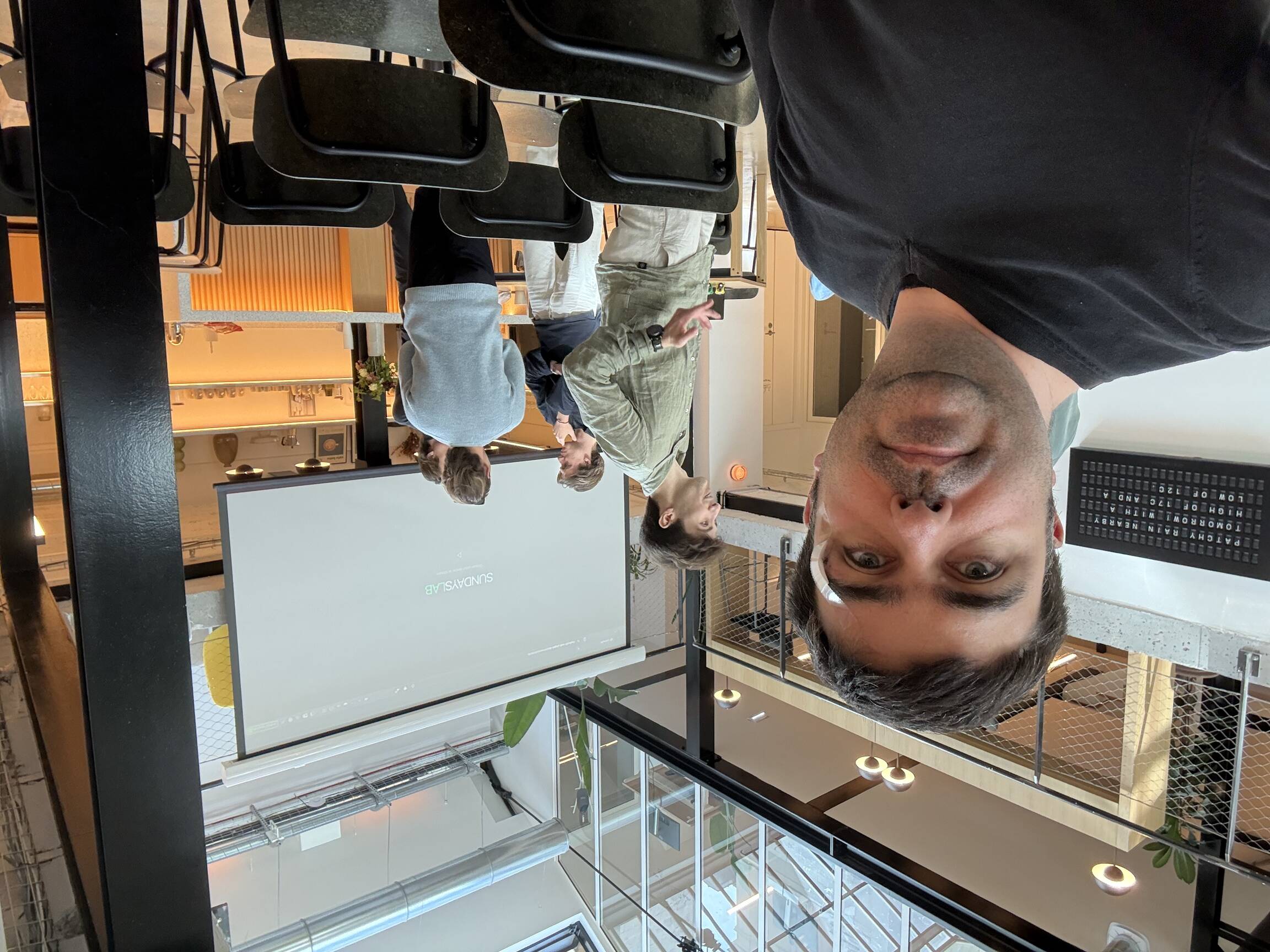
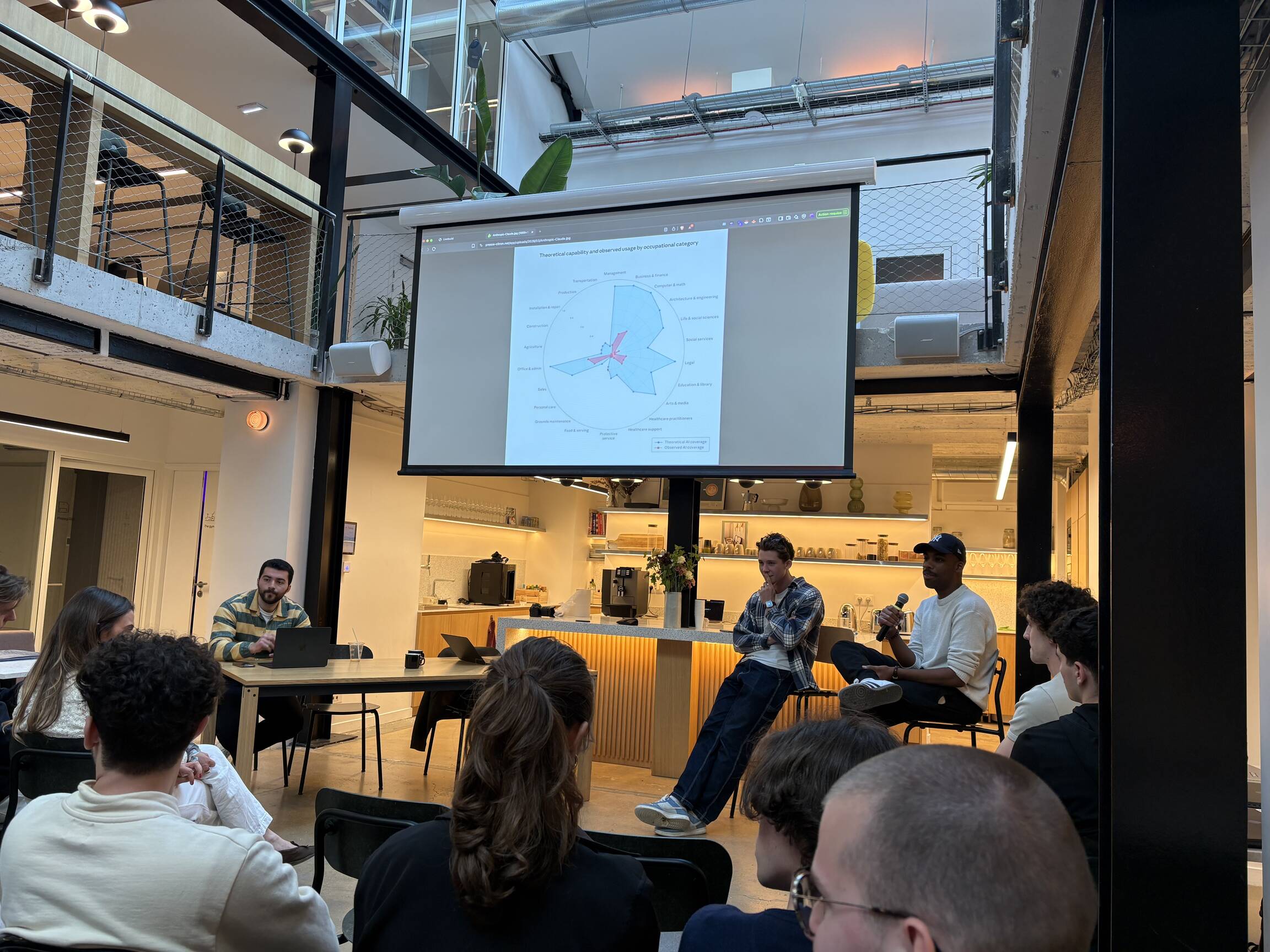
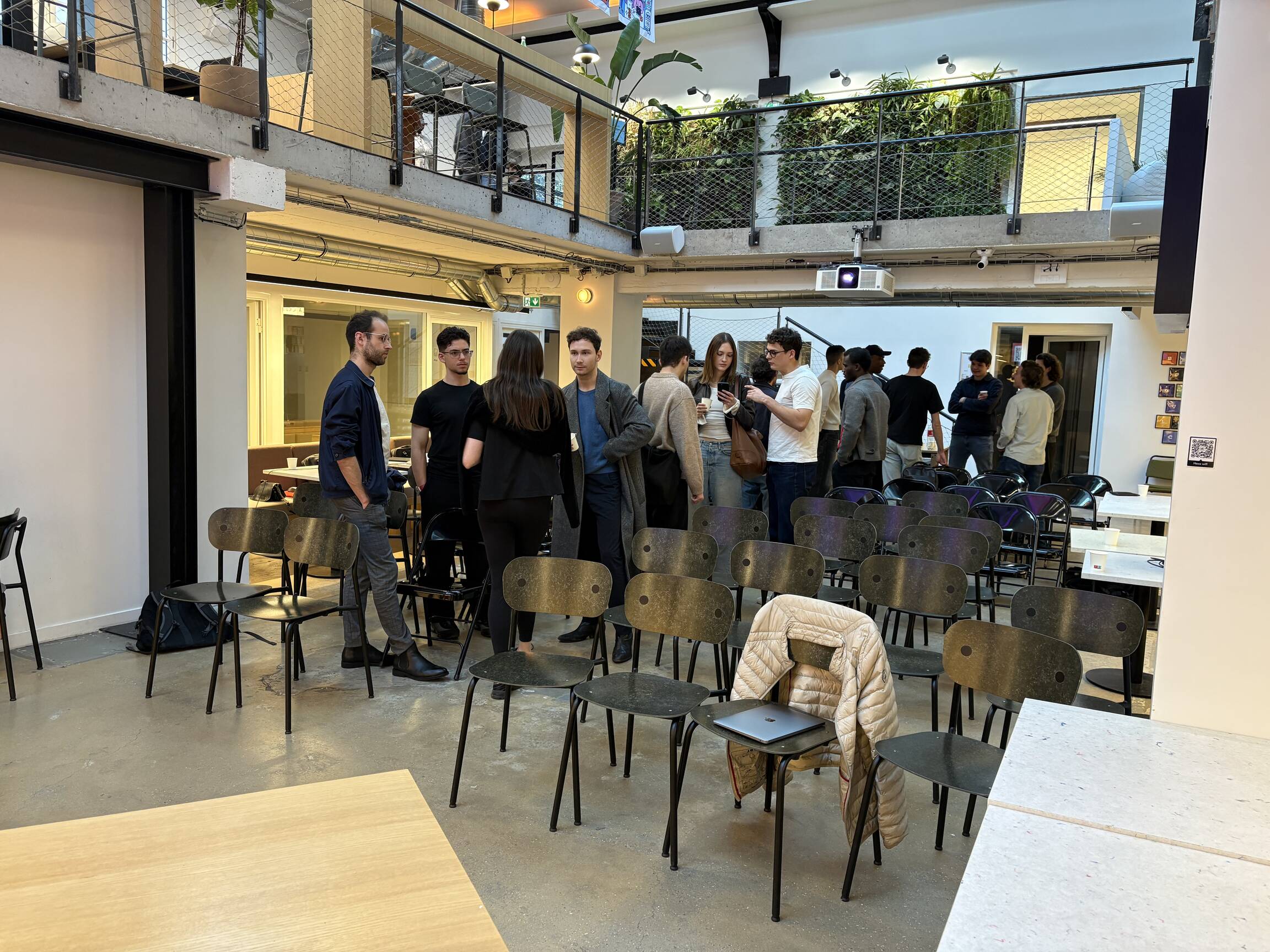
On Sunday, April 19, 2026, at Hexa (eFounders) in Paris, a new edition of Sundays Lab was held. A seemingly simple format: coworking, AI workshop, exchange session.
But in practice: 👉 a concrete demonstration of what the builder ecosystem will become in 2026.
⚙️ A paradigm shift: from conference to interactive system
The first strong signal of the event is not technical.
This is the format.
We are no longer sure:
- top-down talks
- “Inspiring” speakers
We are on:
- a real-time construction
- an ongoing interaction**
- a system where the audience becomes a co-creator
“We didn’t want a traditional workshop. We wanted everyone to participate.”
Here's a section ready to integrate into your Darkwood article 👇
🧑🚀 Speakers & Participants - Projects and Signals
👤 Pato - AI & Automated Go-To-Market
As the founder of Cluently, he embodies the “builder + sales” profile. His presentation shows how AI can replace entire business functions (prospecting, matching, CRM).
👉 Project presented:
- AI agent for automated prospecting
- Intelligent matching between profiles / opportunities
- Build Society community app generated live
👉 Key signal:
The future of SaaS = agent + distribution, not just product
👤 Jules - Growth & Creative AI
Founder of Loops, focused on performance marketing.
👉 Project:
- SaaS for generating high-performing ads
- Focus on creativity as the main driver of growth
👉 Insight:
- Growth no longer comes from targeting
- but large-scale content creation via AI
👤 Tom - Personal branding & distribution
Content creator (philosophy + tech), rapid growth on Instagram.
👉 Positioning:
- Build an audience before a product
- Transforming complex ideas into viral content
👉 Insight:
Distribution is becoming a stronger asset than tech.
👤 Lucas Lefner - Startup advisory & network
Provides support to early-stage startups (strategy, sales, equity).
👉 Model:
- support in exchange for equity or mission
- creation of a business club (Startup Hunters)
👉 Key insight:
“90% of business is networking”
👉 Signal:
- return of network-driven business
- Importance of private circles / clubs
👤 Enzo - Iomaris
Real estate startup (beta phase).
👉 Product:
- Platform for managing a real estate project from start to finish
- Profitability analysis, taxation, market
- collaboration between individuals and professionals
👉 Business model:
- Free for individuals
- Monetization via professionals (leads)
👉 Insight:
- extreme simplification of a complex domain via AI
- trend “vertically integrated business assistant”
👤 Eli - Gamified Education App
Student (HEC), project focused on academic productivity.
👉 Product:
- collaborative work app
- Strava-type logic applied to the study
- comparison between students / classes
👉 Insight:
- gamification + social = strong engagement lever
- “public progress tracking” logic
👤 Romain - Automated Pentest with AI
Profile not an expert in cybersecurity.
👉 Product:
- Automated penetration testing service via AI
- Use of scripts + LLM to detect vulnerabilities
👉 Model:
- one-off service (audit)
- no ongoing maintenance
👉 Key insight:
AI makes it possible to create expert services without initial expertise.
👉 Signal:
- explosion of AI-augmented agencies
👤 Laurent (Startup Hunters) - Ecosystem & Support
Supports startups and young entrepreneurs.
👉 Activity:
- business structuring
- Connecting investors and founders
👉 Insight:
- Lack of operational support for early founders
- growing need for on-the-ground guidance
👤 GEO Project (AI Search Optimization)
E-commerce consultant / Advanced SEO.
👉 Product:
- optimization tool to appear in LLM responses
- alternative to traditional SEO
👉 Function:
- analysis of the sources used by AI
- Content optimization + ecosystem
👉 Key insight:
AI traffic will surpass traditional SEO
👤 Social Matching Project (anonymous)
Next generation social network concept.
👉 Product:
- Weekly matching based on deep interests
- No profile, no swipe
- authentic interaction
👉 Insight:
- reaction to the saturation of social networks
- back to qualitative interactions
🧭 Overall reading
These profiles show a clear convergence:
1. All projects use AI
But at different levels:
- Automation (sales, penetration testing)
- product (ads, real estate)
- distribution (content, GEO)
2. The technical barrier disappears
➡️ Everyone can build ➡️ so the difference lies elsewhere
3. The real weapons become:
- network
- distribution
- branding
- niche
In concrete terms:
- an app generated live
- decisions made via vote
- a product built in front of the audience
👉 The event itself becomes a product prototype.
🤖 AI is no longer a tool, it's a production interface
The workshop highlighted a key point:
👉 Software creation is now iterative, public, and assisted.
A concrete example observed:
- app scenario generation
- code generation with LLM (Claude)
- Automatic error correction
- near-immediate deployment (Cloudflare)
“Claude generates the code, corrects his errors, and we build the app as we go.”
What it actually changes
Before :
- design → dev → test → deploy
NOW :
- intention → generation → feedback → correction
👉 The cycle becomes continuous and conversational.
🧠 The real issue: distribution > technology
One point came up several times during the exchange session:
👉 Technology is no longer the barrier to entry.
What remains difficult:
- find customers
- distribute a product
- create an audience
“Code is becoming commoditized. The real barrier is distribution.”
Direct consequence
We observe a shift:
| Before | Now |
|---|---|
| Build a product | Build an audience |
| Optimize tech | Optimize acquisition |
| Be a developer | Be a full operator |
📈 Acquisition: Organized Chaos
The discussions highlighted a reality:
👉 There is no longer a single dominant channel.
Canals mentioned
- LinkedIn (B2B, decision-makers)
- Instagram (creation + virality)
- Twitter/X (monitoring + opportunities)
- Email (still extremely effective)
Key Insight
👉 Efficiency comes from:
- repetition
- multi-channel presence
- the transformation of content into multiple formats
“A video → shorts → reels → LinkedIn post → newsletter”
🧩 The emergence of “hybrid builders”
One profile keeps recurring:
👉 people not technically expert → capable of creating products using AI
A striking example:
- creation of an automated penetration testing service
- without advanced cybersecurity expertise
- based on tool orchestration + LLM
“I don’t have strong technical skills, but it works.”
🧠 The underlying problem: cognitive overload
Everyone shares the same feeling:
👉 AI is going too fast
Symptoms :
- permanent FOMO
- too many tools
- too many new things
Observed response:
👉 Return to:
- Task structuring (SOP)
- simplification
- focus
“Write down your tasks one by one, then see what AI can optimize.”
🧬 AI amplifies… but does not replace
A central question was raised:
👉 Will AI kill products?
Overall response from the group:
❌ No ✅ It filters
What disappears
- low-quality products
- SaaS without distribution
- worthless clones
What remains
- branding
- network
- human relationship
“AI amplifies both the good and the bad.”
🌐 Towards a new layer: GEO (AI Search)
An advanced topic has emerged:
👉 GEO (Generative Engine Optimization)
Objective :
- appear in LLM responses (ChatGPT, etc.)
- not just in Google
Figures mentioned:
- 18x growth in AI traffic
- 4x conversion on this traffic
“Users coming from ChatGPT convert 4x more.”
👉 This is probably the equivalent of SEO… AI version.
🤝 The heart of the model: connecting people
The product built during the event is revealing:
👉 a matching app for participants
Aim :
- Connect problems ↔ solutions
- create real synergies
“Matching problems with solutions.”
🧭 Darkwood Reading
This meetup confirms several major trends:
1. The technical stack becomes secondary
Symfony, Node, etc. → important But more differentiating on its own
2. Orchestration becomes key
What you do with Flow → totally aligned
👉 Connect:
- data
- agents
- workflows
3. The product = system + distribution
Not just code
4. The future is hybrid
- AI → execution
- human → direction
⚡ Conclusion
Sundays Lab #3 is not a meetup. This is a prototype of what the tech ecosystem is becoming.
👉 A space where:
- on build live
- we learn by doing
- we connect in real time
And most importantly:
👉 where the real skill is no longer coding but to transform an intention into a functional system.